Talent
鈥楾alent鈥� 鈥� the personalities in front of the camera/behind the microphone, as well as the staff who make the machine of the 麻豆社 turn 鈥� has always been key to evolving the 麻豆社. How has the treatment of talent changed over time? Dixi Stewart, current Head of Talent Management at the 麻豆社 looks back.


Like every talent manager at the 麻豆社, my aim is to make sure this is the place where the most talented people love to work. And that鈥檚 talented individuals at every stage of their careers 鈥� new talent, developing talent, top talent and then enabling these people to pass their skills on to the next generation of broadcasters.
Easy to say, but of course much harder to realise. And not without its demons. So what a fascinating experience this has been for me, to open up the 麻豆社 oral history archive and hear how the men and women of the past tackled the issue of talent, how they grew celebrity and popular personality on air, how they nurtured the skills of those off-air, and how they made sure there was never an absolute divide between the two.
The Talent Impresario
Bill Cotton was the son of the famous Billy Cotton, band master and impresario. He inherited his father鈥檚 flair and nose for show business, knowing instinctively what performers, presenters and artistes he needed in his TV line up, and trusting that instinct absolutely. He seemed to know too that he was inhabiting a glorious moment for the burgeoning TV industry in the 1960s and 70s, with talented people everywhere clamouring to have a go 鈥� Morecambe and Wise, Ronnie Corbett and Ronnie Barker, Dave Allen, Mike Yarwood, Cilla Black, Cathy Kirby, Simon Dee, Cliff Richard鈥� He reels off the names in his interview, and admits 鈥業 was quite good at picking them鈥� what is more important you don鈥檛 just have to pick them, you have to pick them when they can do it鈥�.
So Cliff Richard鈥檚 agent kept badgering Bill Cotton for a TV series, but Cotton held out until he was sure that Cliff was ready for a Saturday night spectacular 鈥� which he eventually went on to front on 3rd January 1970. And it鈥檚 not just picking the moment, it鈥檚 also knowing what your entertainers are good at 鈥� not what they think they are good at. So Cotton disappointed both impersonator Dick Emery and showbiz star Bruce Forsyth when he told them they couldn鈥檛 have the singing slots they desired in their shows, but they could absolutely go on doing what they were sublimely good at and what the audiences loved them doing.
These conversations can be very difficult. It can鈥檛 have been easy telling Bruce Forsyth he was 鈥榯hird-rate doing all that stuff鈥� (the song and dance routines), but it鈥檚 all part of the talent management process. I am sure too that Cotton would have been constantly on the look-out for opportunities for his team of talented personalities鈥� as with Bruce Forsyth and the new Generation Game vehicle (鈥榯his has got Bruce Forsyth written all over it鈥�).

It is all part of helping talented people to shape their ideas, managing the relationship with them over time, and reflecting back to them the broader audience perspective too.
Audience and talent
The needs of our audiences driving our choice of talent was the next striking oral history insight that I encountered. In the mid-1960s, the 麻豆社 had no youth voice on radio. The likes of Radio Luxembourg and the exciting pirates of Radio Caroline 鈥� spinning discs illegally on an old oil tanker off the East coast of England 鈥� were giving teenagers exactly what they wanted: wall to wall pop records. So what did the 麻豆社 do? They did a talent grab, and when the UK government finally made the pirates illegal in 1967, Robin Scott, the new Controller of 麻豆社 Radio, offered them jobs on the good ship 麻豆社.
This was the audience telling us who they wanted to hear. When Tony Blackburn came from Radio Caroline to Radio 1, he immediately connected with a younger audience and made them feel the newly created 麻豆社 pop station belonged to them. He did more too 鈥� it wasn鈥檛 just the people, it was also the technology. Tony Blackburn couldn鈥檛 spin his discs and banter his way through the morning show unless he had his self-op desk: the technology was key to his radio fluency and Scott made sure he had all he needed.
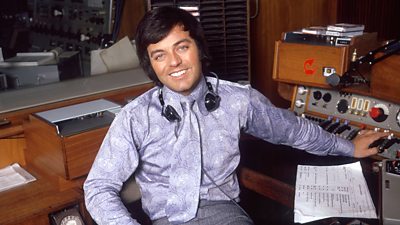
The transformation wasn鈥檛 easy 鈥榯here was a feeling that Broadcasting House had been invaded鈥� by a rather disreputable crowd鈥�! But all credit to Scott that he realised 鈥榠t was death to the organisation鈥� unless he brought about this change and satisfied the needs of young listeners.
In the same way today podcasting has enabled so many talented presenters to find a new way of expressing themselves 鈥� the format gives them licence to present a different, often more informal version of themselves to how they appear on a scheduled radio programme.
And it鈥檚 not just on-air talent. When Michael Peacock was seeking to create the second 麻豆社 channel 鈥� 麻豆社 Two in 1963, at age of just 34 - he realised that he didn鈥檛 have the right production teams in place. So he initiated a vast recruitment drive 鈥� 1,000 new producers, scriptwriters, directors, assistants were appointed, so that the content would be right for a new channel. New voices for a new age. It was bold and brave thing to do. He realised as well that it didn鈥檛 just stop at the recruitment, the new 麻豆社 2 team then had to be appropriately trained, encouraged and developed: he had to create a whole new culture within the fixed culture of the 麻豆社.
It鈥檚 a parallel with what we are doing now in 2022: appointing 1,000 new apprentices. They will have new digital skills, new perspectives, new voices, and they will begin a transformation process much as Peacock aimed to do with his new second channel launched in 1964.
New Talent
One of the best jobs I ever had was producing The Food Programme on Radio 4. And I remember its first presenter Derek Cooper telling me that when in 1979 he initially presented his proposal for a six part pilot, he was asked if he was sure that there was enough to say about food to fill six programmes?! Unbelievable, when you consider the feast of food programming that now spills across our radio and TV schedules.
So when I listened to the recollections of TV cook Zena Skinner talking about her first TV audition, it struck me that it鈥檚 ideas as well as people who need to find their moment. That鈥檚 a part of the talent quest too.
Zena Skinner鈥檚 appointment tapped into the end of post-war austerity, and the emergence of cooking as an everyday act of creativity to an audience of women at home. When she had her TV audition - comically using a few stationery items on a desk - her future producer was checking out if she had both the knowledge the audience needed but also the right practical skills to communicate them on television.
Since the 1970s, the 麻豆社 has been formalising its approach to identifying new talent 鈥� especially around young people. In 1978, it launched Young Musician of the Year, which has created the careers of an extraordinary array of classical talent, from Nicola Benedetti to Sheku Kanneh-Mason - both of whom have gone on in turn to promote their own inspiring schemes of musical development.
One of the most recent iterations of these talent programmes is 麻豆社 Introducing which, as Yasser from the Asian Network says here, takes people 鈥榪uite literally from making music in their bedroom to the radio鈥�. It has made the careers of Ed Sheeran, Jake Bugg, Florence and the Machine, among many others, and put their music on 麻豆社 radio stations, offered them master classes with the best in the business, and even propelling them on stage at the Glastonbury Festival.
Now, there is a lot of very useful data behind the search for new talent, and we work closely with our Audiences teams to understand what people want now and in the future. How is current on air talent perceived? Who are we missing? How can we curate a pipeline of talent? How can we use talent to deftly express the changing nature of Britain and its place in the wider world?
But it鈥檚 never an exact science and as Bill Cotton knew, it鈥檚 instinctive and the human. My job and the jobs of all those in the past whose recollections I鈥檝e listened to here come down to that. At its very best, the quest for talent is the endless search for those unique, original voices which connect us brilliantly with the moment and with all our audiences everywhere.
Written by Dixi Stewart, current Head of Talent Management
Get to know 麻豆社 Music Introducing
Discover how 麻豆社 Music Introducing supports emerging UK artists: from the Uploader to national radio, festival stages and beyond. Artist from the Uploader can now find their tracks being played on 麻豆社 Radio 1, Radio 2, Radio 3, 6 Music, 1Xtra, Asian Network and the World Service. .