Radio and resilience: saving lives in the Himalayan monsoon
The story of Bindu Chaudhary, a young journalist in Nepal saving lives from devastating flooding through her radio broadcasts.
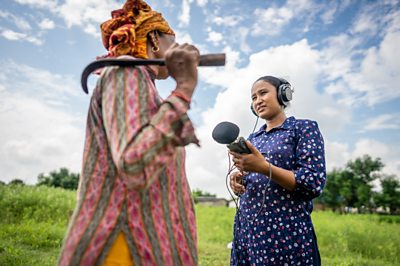

In Nepal, when it rains, it pours. The Himalayan monsoon is both a lifeline and a looming threat. While it sustains farming, it also unleashes devastating floods and landslides. Over the past decade, monsoon-related disasters have killed 3,456 people.
A major reason for such devastation is the lack of reliable weather information, especially in poor and vulnerable communities. Unlike in cities, where people can turn to apps and social media, many rural families rely solely on the radio 鈥� or on word of mouth 鈥� for alerts.
When the monsoon clouds gather in the sky, Chaini Chaudhary, 32, rushes to cover the leaky thatched roof of her house with plastic sheets. She looks for her mobile phone, which is old and has only basic functions, so she uses it sparingly 鈥� mostly to make calls or listen to the radio, her most important source of information.
Born into the family of a bonded labourer, she grew up under kamaiya pratha 鈥� a system of slavery that existed in Nepal until July 2000. Like her parents, she was forced to work as a bonded labourer, doing household chores for a local landlord until the age of seven. After kamaiya pratha was abolished, the government distributed small plots of land to families like hers. On this land, they built mud-and-bamboo houses. Chaini still lives in one of these fragile homes in Bansgadhi, Bardiya, in Nepal鈥檚 western plains.
A gift of land - and flooding
Freedom from kamaiya pratha soon revealed its own hardships. The land allocated to them turned out to be flood-prone, lying dangerously close to the Duduwa River. With no embankments, heavy rains bring torrents of water surging into her village.
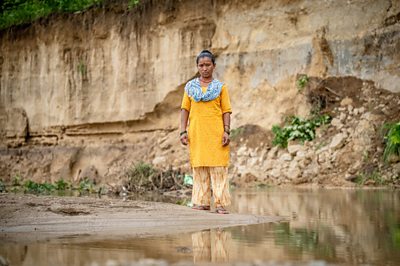
鈥淢y roof leaks even when it rains lightly,鈥� she explains. 鈥淭he plastic sheet I use to cover it is full of tiny holes. When the rain is heavy, my whole house is flooded.鈥�
For Chaini, information can mean survival.
I rely on the radio to know if heavy rains and floods are coming. If I get the warning in time, I can save my cattle 鈥� or even my own life. When I hear about a flood threat, I do not take my cattle to graze near the river. It is too risky.鈥�
Nepal has developed flood monitoring systems for the country鈥檚 major rivers that flow from Tibet and on into the Indian Ocean. When water levels reach warning thresholds, families living along the banks receive messages on their mobile phones. But smaller rivers like the Duduwa are left unmonitored, even though they can turn deadly within hours of heavy rainfall.
鈥淭his river swells so quickly during the rains,鈥� Chaini says. 鈥淚 have seen it sweep away houses and cattle with my own eyes, many times. We do not get warning messages about this river. Radio is the only thing that keeps us informed.鈥�
Basanti Chaudhary, 34, ekes out a living by sewing clothes 鈥� both new and old. While working at her roadside tailoring shop, she keeps her radio on, usually hung on the wall. It is old and rusty, but still enough to listen to songs and the news.
For me, radio is not just a friend 鈥� it is also a lifesaver."
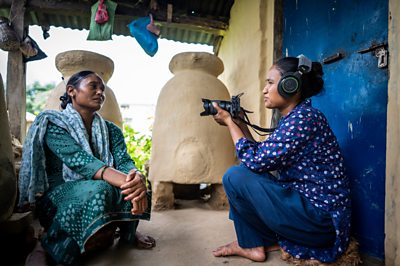
Basanti lives in the same village as Chaini. When heavy rains fall incessantly, her neighbourhood quickly becomes submerged. Like other people in her village, Basanti stores her food grains in Denhari 鈥� traditional storage structures made from bamboo and clay. Three years ago, when her village was flooded, all her Denhari went under water. 鈥淚 lost grains that could have fed my children for the entire year,鈥� she recalls. 鈥淚 had to take a loan to buy food.鈥�
These days, whenever the radio broadcasts forecasts of heavy rains, she rushes to move her grains to a safer place. 鈥淚 always need to be careful 鈥� and for that, weather and flood forecasts from local radio have been very helpful.鈥� Chaini and Basanti are both regular listeners of Hello Mausam! 鈥� a daily weather bulletin produced and broadcast by Gurbaba FM, a community radio station based in Bardiya district of Nepal. Hello Mausam! is the only weather bulletin in Nepal that is broadcast in the local Tharu language 鈥� the mother tongue of the indigenous Tharu people, to whom Chaini and Basanti belong.
'I can trust them'
Chaini says: 鈥淚 listen to Gurbaba FM because it broadcasts news in my own language. When I hear news in Tharu language, it is easier for me to understand. There are so many other radios that broadcast news in Nepali, which I hardly understand.鈥�
Basanti echoes Chaini鈥檚 voice, adding that another reason she listens to Gurbaba FM is because it is established and run by people from her own community. She says: 鈥淚 know the people who broadcast news through this radio. So, I can trust them.鈥�
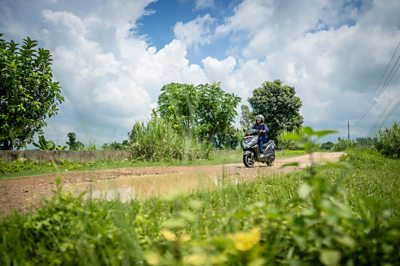
Producing and broadcasting trustworthy and lifesaving news and information through Gurbaba FM is a young journalist, Bindu Chaudhary, 30. Bindu belongs to the same community as Chaini and Basanti, and she too is a flood survivor. During heavy monsoon rains 10 years ago, the surging water from the Duduwa River inundated and damaged her mud house one midnight.
Even though her family has now relocated to a relatively safer area, whenever it rains, the tragic memory of that flood still haunts her. After joining Gurbaba FM, she has been using the media to help protect her community by providing trusted information about rains, floods, and flash floods.
Every morning, she rides her scooter along a cratered dirt road to reach the radio station, which is run by a small team of seven. As soon as she arrives, she checks her email for any weather updates. She monitors the official websites and social media pages of the Department of Hydrology and Meteorology (DHM) and the Local Emergency Operation Centre (LEOC). At times, she calls DHM and LEOC directly for further details. She also uses the government hotline number 1155 to access accurate, up-to-date information about rains and floods.
How to stay safe
Using credible information from verified sources, Bindu produces Hello Mausam! (Hello Weather!), which includes updates on when and where heavy rainfall is expected, whether it may cause damage, how people can stay safe, and whom to contact if they are affected by flooding.
Hello Mausam! has become a trusted source of weather information, especially for the marginalised Tharu community. It is also aired on eight other local radio stations. Together, these community radio stations reach thousands of people living in disaster-prone rural areas of mid-western Nepal.
As someone who witnessed the destruction caused by the flood, helping save people with trusted information feels like a personal mission.鈥�
Bindu Chaudhary is one of 30 journalists trained by 麻豆社 Media Action in Nepal to communicate trusted information about weather and climate in ways that motivate communities to take positive action. They work across 14 community radio stations, including Gurbaba FM.
麻豆社 Media Action also provides regular mentoring to help these journalists identify authentic sources, produce engaging content, and deliver timely updates that can protect communities from monsoon rains, floods and flash floods.
Radio and social media as lifelines
Journalists like Bindu play a vital role for isolated communities in Nepal. With 麻豆社 Media Action鈥檚 support, they work with community radio stations to share information that is not only accurate but also actionable. Dedicated mentors guide them in gathering updates from reliable sources, and in producing content not just for radio but also for social media. Bindu also creates social media content about weather and climate, helping communities stay informed about the progress of the monsoon, potential risks of extreme rain and flooding, and ways to stay safe. Those with smartphones and internet access can use this content to receive timely weather updates.
In small communities like Chaini and Basanti's, radio is a lifeline. Bindu's voice on the airwaves enables these communities to prepare for the extreme weather events they face, saving them from danger.
More about 麻豆社 Media Action

Latest news from Nepal
Search by Tag:
- Tagged with Asia Asia
- Tagged with Nepal Nepal
- Tagged with Climate change Climate change