
Bernard Haitink, Pierre Schaeffer and a 40,000 year old flute.
Tom Service talks to conductor Bernard Haitink, and explores the legacies of American musical polymath Nicolas Slonimsky and electronic music pioneer Pierre Schaeffer.
Tom Service talks to the conductor Bernard Haitink as he begins a tour with the London Symphony Orchestra, explores the legacy of the American musical polymath Nicolas Slonimsky through letters newly published by his daughter Electra Slonimsky Yourke, and talks to the electroacoustic composer Simon Emmerson and Rob Young of The Wire about the influence of Pierre Schaeffer's classic texts on "concrete music", now translated into English for the first time.
Last on

Clips
-
![]()
Pierre Schaeffer
Duration: 12:07


Chapters
-
Bernard Haitink
Tom Service interviews conductor Bernard Haitink.
Duration: 25:01
40,000 year old flute
Tom discovers Ice Age music.
Duration: 05:44
Pierre Schaeffer
The musical language of Pierre Schaeffer.
Duration: 12:52
Bernard Haitink
![Bernard Haitink]()
With an international conducting career that has spanned nearly six decades, Amsterdam-born Bernard Haitink is one of today鈥檚 most celebrated conductors. Chief Conductor of the Concertgebouw Orchestra for 27 years he is now their Conductor Laureate and has also held posts at the Royal Opera House, Glyndebourne Festival Opera, the Chicago Symphony Orchestra and the London Philharmonic. In a rare interview Haitink talks to Tom after a rehearsal at the Barbican about the very earliest days of his career at Netherlands Radio, the difficulties of conscience he faced working in post war Europe and why today鈥檚 politicians must prioritise the arts.
Photo: 漏 Todd Rosenberg
Ice Age Music
![Ice Age Music]()
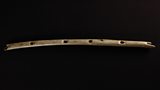
This month sees the opening of a new exhibition at the British Museum. 鈥業ce Age Art: arrival of the modern mind鈥� features the world鈥檚 oldest known sculptures, drawings and portraits illustrating some of the earliest endeavours of creative expression. Amongst the exhibits is a Palaeolithic flute discovered three years ago by archaeologists in the Hohle Fels cavern in southwest Germany. Estimated to be around 40,000 years old the flute is made from the bone of a griffon vulture. Tom visits the exhibition with Professor Steven Mithen who explains the flute鈥檚 significance in our understanding of music at the dawn of the modern mind.
Photo: Hohle Fels, Flute (vulture bone). Photo: H. Jensen, copyright University of T眉bingen.
Pierre Schaeffer
![Pierre Schaeffer]()
French composer, writer, broadcaster, engineer, musicologist and acoustician Pierre Schaeffer gained widespread recognition in his lifetime for his innovative work in both the sciences鈥攑articularly communications and acoustics鈥攁nd the various arts of music, literature and radio presentation after the end of World War II. Today Schaeffer, who died in 1995, is most widely recognized for his accomplishments in electronic and experimental music, especially his development of the avant-garde musique concr猫te.聽 As his seminal text 鈥業n Search of a Concrete Music鈥� is published for the first time in English, Tom talks to composer Simon Emmerson and music journalist Rob Young about Schaeffer鈥檚 unique sense of fun in musical discovery and experimentation, and his influence on subsequent generations of composers.
Photo: courtesy of聽Ina GRM
Broadcast
- Sat 16 Feb 2013 12:15麻豆社 Radio 3


Knock on wood 鈥� six stunning wooden concert halls around the world
Steel and concrete can't beat good old wood to produce the best sounds for music.
The evolution of video game music
Tom Service traces the rise of an exciting new genre, from bleeps to responsive scores.
Why music can literally make us lose track of time
Try our psychoacoustic experiment to see how tempo can affect your timekeeping abilities.
Podcast
-
![]()
Music Matters
The stories that matter, the people that matter, the music that matters

Related Content