The Lives of Youngsters
We begin 2022 with the views of young people, on the issues that have always been the concerns of In Touch: education, jobs, relationships, and our access to all these things.
Kerry Burke, Eilidh Morrison and Reece Watt are all from Scotland and are members of the youth forum Haggeye. Haggeye first began in 2007 as part of RNIB Scotland. Its a place where young people from all over Scotland can meet to socialise and campaign on issues such as accessible transport, the need for more educational material in formats such as braille and audio and more.
We speak to the three youngsters about their involvement in Haggeye and their lives more generally. We ask for their thoughts in relation to education, jobs, relationships and The Scottish Youth Parliament, of which Kerry and Eilidh are members.
Presenter: Peter White
Producer: Beth Hemmings
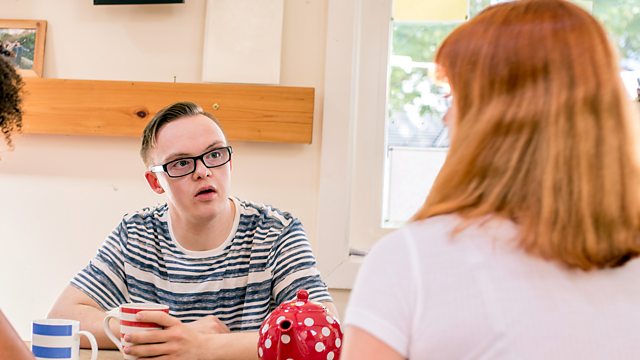
Website Image Description: the image shows three young people sat around a table having a discussion and enjoying a cup of tea. On the table is a large red spotted teapot. In the foreground are two young females, seemingly enjoying each other's conversation. Between them is a young man in a striped shirt and glasses. He is leaning in to listen.
Last on

More episodes
Next
In Touch transcript: 04/01/22
Downloaded from
听
THE ATTACHED TRANSCRIPT WAS TYPED FROM A RECORDING AND NOT COPIED FROM AN ORIGINAL SCRIPT.听 BECAUSE OF THE RISK OF MISHEARING AND THE DIFFICULTY IN SOME CASES OF IDENTIFYING INDIVIDUAL SPEAKERS, THE 麻豆社 CANNOT VOUCH FOR ITS COMPLETE ACCURACY.
听
听
IN TOUCH 鈥� The Lives of Youngsters
TX:听 04.01.2022听 2040-2100
PRESENTER:听 听听听听听听听 PETER WHITE
听
PRODUCER:听 听听听听听听听听听 BETH HEMMINGS
听
听
听
White
Good evening.听 New Year new voices.听 We wanted to start 2022 specifically with the views of young people on the kinds of issues which have always been the concern of In Touch 鈥� education, jobs, relationships.听 So, we were delighted to discover that in Scotland a youth forum has recently reformed, after a lull because of covid, to do exactly that.听 It鈥檚 called, intriguingly, Haggeye 鈥� we鈥檒l find out why in a moment 鈥� but first, let鈥檚 meet three of its members 鈥� Kerry, Reece and Eilidh 鈥� and in the best traditions of In Touch, let鈥檚 get you all to introduce yourselves and just tell us a bit about yourselves.听 Kerry, if we could start with you?
听
Kerry
I鈥檓 from East Kilbride, I鈥檓 17 and my visual disability condition is albinism with nystagmus and photophobia.听
听
Reece
My name鈥檚 Reece and I鈥檓 from Aberdeenshire.听 I鈥檓 23.听 My eye condition is called optic nerve hyperplasia, that means I鈥檓 completely blind and I鈥檝e been blind since birth.
听
Eilidh
I鈥檓 Eilidh, I鈥檓 from Aberdeen, I鈥檓 20 years old and my visual impairment is retinitis pigmentosa and ocular motor apraxia.
听
White
And you鈥檙e all members of the Scottish Youth Forum or Haggeye, so Kerry, go on then, explain to me about that 鈥� why the name, what does it mean?
听
Kerry
I鈥檓 pretty sure it鈥檚 about like because it鈥檚 haggis, because it鈥檚 Scottish, we decided to involve that in some way.听 But it鈥檚 basically a community of sorts for young people within Scotland who have visual impairments.听 It鈥檚 tailor focus to us campaigning for our rights and voices to be heard whilst also having a very good social sector so other visual impaired people can talk to each other and communicate.
听
White
Okay.听 So, tell me, Eilidh, for example, what are the kinds of things that get Haggeye going?听 I mean Kerry, there, said it was a campaigning group, so what are the big issues as far as you鈥檙e concerned?
听
Eilidh
The biggest campaign we work on is awareness.听 People are more understanding if they鈥檙e aware of how to help a visually impaired person.听 But also, we鈥檝e done campaign, in the past, involving buses.听 So, we did a campaign with Stagecoach where we swapped places with them, so they were blindfolded and they had to get on the bus.
听
White
So, what are the things people do wrong?
听
Eilidh
When you ask for 鈥� can you please tell me when it鈥檚 my stop 鈥� the bus drivers forget and I mean that鈥檚 very easy to forget but it鈥檚 something we really rely on.
听
White
And it鈥檚 very frustrating, isn鈥檛 it, because you鈥檙e sitting there, you鈥檙e trying to count the stops, you鈥檙e trying to remember the turnings, traffic lights feel like stops 鈥� it鈥檚 all that kind of stuff, isn鈥檛 it?
听
Eilidh
Yeah, definitely.听 So, getting them to go on a bus, wearing a blindfold, really helped them and help us understand how they like perceive it, through sitting in the bus driver鈥檚 seat.听 I have definitely seen an improvement.
听
White
I鈥檓 going to ask you all about education because you鈥檙e all still in education in one form or another.听 Eilidh, you鈥檙e now at university studying physics but I think you鈥檝e had a number of access problems at school.听 Explain the sort of things you mean.
听
Eilidh
The problems kind of started when I moved to secondary school.听 First, my primary school asked my secondary school if I wanted my PSA with me, so they could read and scribe for me and my secondary school said no.听 I was a bit shocked that they said they didn鈥檛 need that and they could cope with that on their own.听
听
White
So, that was early on.听 Have there been other things as your schooling鈥檚 developed?
听
Eilidh
So, it鈥檚 with technology and I had a brilliant QTVI, which is qualified teacher for the visually impaired, until I was in S4 and she was great and continued to teach me maths braille because I do science.听 And then she retired when I was finishing my NAT 5s and then the people who took over from her, first of all, there was three of them and they didn鈥檛 communicate with each other, so if I told one of them my iPad was broken, the next day I would have someone new and they wouldn鈥檛 know my iPad was broken.听 And that was really something that was frustrating.
听
White
So, it was all a bit of a struggle really.
听
Eilidh
Yes.
听
White
Kerry, you鈥檙e in your last year at school, how have things been going for you?
听
Kerry
Me and Eilidh are kind of on completely opposite sides of the spectrum in that way because I got the opportunity to choose which high school I went to.听 I was able to tour it where there was a specific visual impairment base and I decided to go there and I like 100% I鈥檓 so glad I made that decision.听 So, my high school experience is really good, I鈥檇 say, when it comes to visual impairment because the school, itself, is really supportive, like the general population.听 I went into first year and it was all this new equipment, there was someone for every subject in it, there鈥檚, within the unit, teachers who have a degree in a specific subject, so then when you鈥檙e in classes if you need support then they can help you with that and you鈥檙e given a key adult, with one specific staff member to coach you alone and check up on you and give you targets.听
听
White
Just to make it clear, you鈥檙e in a special unit of a mainstream school, is that right?
听
Kerry
Yeah, so, technically I鈥檓 just a pupil, honestly like regular people, but I鈥檓 part of the mainstream school but I鈥檓 also a part of the unit.听 So, then, if I have a problem or there鈥檚 accessibility where a teacher鈥檚 trying to get me to use, they would send it to the unit and then the staff member from there would adapt for me.听 But then, over the years, you obviously, naturally, get more independent as you become a teenager and grow up in the school.听 So, in first year I had a support assistant with me in every classroom and now I don鈥檛 have one at all and I鈥檓 completely electronic working, I don鈥檛 have a single jotter, there鈥檚 no point.听 I bring a pen but I don鈥檛 use it, I do everything electronically.听 And I鈥檓 now at the stage where we can skip the phase of liaising with the unit every time.
听
White
That鈥檚 really interesting because you鈥檙e in a unit, as you say, where, you鈥檙e almost implying, you perhaps get the best of both worlds.听 And I want to bring Reece in on this because I think you鈥檝e been both at a special school originally and in mainstream education.听 How would you compare those experiences?
听
Reece
I would say the specialist school was probably the best.听 I went to mainstream primary and that was okay, I鈥檇 say like most people in primary you have someone to help you more often.听 Because I went to mainstream secondary for a few months but that didn鈥檛 really work out, they weren鈥檛 really understanding what I needed.听 I think there was too many teachers and a lot more pupils in the class, it was kind of harder for them to accommodate.听 And then when I went to the blind school, it was completely top of the range, you know, because they knew what they were doing all the time.
听
White
So, at the end of your education, your secondary education, where were you then?
听
Reece
I鈥檓 at college just now, so, yeah, it鈥檚 a mainstream college.
听
White
Can I check all your attitudes really?听 What do you think is the ideal because this is a debate that goes on and on, this business about whether it鈥檚 better to go to a special school, a mainstream school with a unit or just be part of the mainstream?听 I鈥檓 going to ask you all what you think is the preferred option, if you鈥檙e able to say.听 Kerry, if I can start with you?
听
Kerry
I would definitely say the way you described it, my situation of the best of both worlds because even though I鈥檓 a really independent learner, especially in school, so it鈥檚 one of those things that not really asking for help, I鈥檓 not really needing the support now, if I was at a mainstream school, I would 100% feel 鈥� struggle and frustrated.听 I wouldn鈥檛 feel supported.听 I鈥檇 feel supported as a teenager in high school but not as a visually impaired teenager in high school.
听
White
Eilidh, what about you?
听
Eilidh
Yeah, I think I would agree.听 At my high school we had ASN, for additional support needs, they were going to put me in there but we took the decision not to because I didn鈥檛 think that I was needing that much support.听 But, at the same time, I wasn鈥檛 comfortable in mainstream.听 So, like I didn鈥檛 fit into either of those boxes.听 So, I definitely think a bit of both would have been great.
听
White
And Reece, I think if I read you right, you鈥檙e saying actually you think a special school has worked best for you?
听
Reece
Yeah, I think so because it鈥檚 not that I can鈥檛 manage in mainstream workwise, it鈥檚 more the attitude, I think.听 I kind of feel now, in the college, that sometimes the support team almost like they decide when you can be independent and when you can鈥檛.
听
White
I鈥檓 just wondering where all this is leading you in terms of jobs.听 Can we establish what you鈥檙e all hoping to do?听 Eilidh, let me start with you.
听
Eilidh
I don鈥檛 know for certain what I want to do.听 I鈥檓 doing physics at uni at the moment and I鈥檓 really into space science.听 My dream, dream job would be working at NASA.
听
White
And how difficult is it to do a subject like physics with a visual impairment?
听
Eilidh
It鈥檚 a nightmare.听 You have all these equations that the software I have doesn鈥檛 read out the equations in the right order to make them make sense.听 There鈥檚 nothing wrong with me understanding, it鈥檚 the accessibility aspect of it.
听
White
So, is there usually a software solution, if you can find the right person?
听
Eilidh
Yeah, usually.听 Maybe it鈥檚 a combination of two things.听 For example, right now, I鈥檓 using a technology called Fusion and it鈥檚 a combination of two old things put together to make a new thing.听 So, it magnifies the screen to as big as you want it or as small as you want it.听 But also, Fusion has something called JAWS installed with it, as well, so JAWS is a screen reader, so every time you put your mouse over something JAWS will read it out to you.听 Technology is great when it works.
听
White
I mean, presumably, there are lots of things that you could do which would be a lot easier than what you鈥檝e decided to do.听 I take it you鈥檝e decided to do this because it鈥檚 what you really care about.
听
Eilidh
Yeah, definitely, yeah.听 I love physics, yeah.
听
White
Is it doable, do you think?听 Do you think you could get a job in a field as competitive as space research and space exploration?
听
Eilidh
Well, I know it can be done because there are other blind people who work at NASA, which is really cool, and they have like changed the way you analyse data.听 Usually, you get a big screen of numbers but now they鈥檝e turned it into sound, so depending on what numbers they are the soundwaves will change, which I think is pretty cool.
听
White
And I know you鈥檙e right because we鈥檝e interviewed somebody who worked at NASA, so they do exist and it can be done.听 Reece, what do you want to do?
听
Reece
I don鈥檛 know yet either.听 I鈥檓 doing social science, just now, because it has that broad range of subject areas.听 It gives you a chance to try out different aspects.
听
White
Well, Eilidh鈥檚 told us her dream job, go out on a limb, you never know, I mean Eilidh, there could be somebody from NASA listening who鈥檚 about to offer you a job.听 Reece, you must have something in your mind?
听
Reece
I鈥檇 quite like to do some kind of job that would help other people.听 From being at the blind school, there鈥檚 a lot of people that have more complex needs, as well as a visual impairment. 听I kind of got quite used to that and I think maybe from that experience I鈥檇 like to kind of work in an area where I was helping those kinds of people.
听
White
Kerry, either the dream job or the job that you think is most likely the one that you鈥檙e going to get?
听
Kerry
I鈥檝e just applied for university, so it鈥檚 a way away.
听
White
That鈥檚 true, you鈥檙e the youngest, yeah.
听
Kerry
But my number one uni course, that I鈥檇 want to get into, is public sociology and that kind of fits into me wanting to 鈥� then becoming a member of the Scottish Youth Parliament.听 I don鈥檛 think I want to go in the directly parliament route but I do want to have a physical concrete impact on society and the way movements and all that kind of stuff and trying to make change.
听
White
I鈥檓 just wondering what you feel about the amount of help you get and I鈥檓 trying to relate the fact that you鈥檝e got this forum and you can make these points but what you think could be done more in terms of helping people who are visually impaired into jobs, the sort of jobs you鈥檝e been talking about.听 Let me just throw that at Eilidh, is that what the forum should be doing 鈥� pushing for people to get those kind of job opportunities?
听
Eilidh
I definitely think so.听 Right now, the statistics for visually impaired people in work are one in five, which is really quite bad when you think about that.听 So, in Haggeye we鈥檙e helping each other to write our CVs and get a job and go for it.听 But also, trying to raise that number, even if we get it to one in four, I think that would be a massive achievement.
听
White
Right, we鈥檝e been very serious up till now, perhaps we should talk about a few more potentially light hearted things, although they鈥檝e got difficulties as well.听 Can I be cheeky 鈥� any girlfriends, boyfriends on the scene for any of the three of you?听 The most confident can jump in.
听
Kerry
No boyfriends to speak of.听 I鈥檓 concentrating on uni.听 Once I get into uni, I can 鈥� you know what if I get an unconditional, I鈥檒l be like okay, let鈥檚 chill out here.
听
White
That鈥檚 very responsible of you.听
听
Reece
I鈥檓 kind of along the same 鈥� got the same idea.听 Someone will come up when the time comes.
听
White
Eilidh?
听
Eilidh
Not at the moment, no.
听
White
I just wonder how difficult or easy it is to make those kinds of contacts with a visual impairment.
听
Kerry
I think now, because we鈥檙e [indistinct words] with social media, is kind of one of the things that like you can talk to anyone, if you want to.听 I do think, obviously, visual impairments can hold you back in the way of just meeting up.听 For me, that鈥檚 mainly just down to transport.听 But I think meeting people because it鈥檚 social media and it鈥檚 always friends friends and you get to find out who everyone is, sort of thing.
听
White
So, does that actually make it easier, maybe, than it has been in the past, if that鈥檚 the way most contacts are made?
听
Kerry
I鈥檇 say so.听 I mean I know that鈥檚 way me and my friends mostly talk, we talk over social media more than texting.
听
White
And Eilidh?
听
Eilidh
I think reading facial expressions is hard as a visually impaired person.听 That aspect of the whole dating thing is harder for us.
听
White
Right.听 I just want to ask you a bit, certainly Eilidh and Kerry, you鈥檙e both members of the Scottish Youth Parliament, I think through Haggeye and Eilidh, you鈥檝e actually, I think, put a motion through about guide dogs.听 Can you just explain about that?
听
Eilidh
Yeah, I have.听 So, since we left the European Union guide dogs have been taking off a scheme called the Pet Passport Scheme, which allowed guide dogs to move from country to country within the EU.听 So, the motion is about getting the UK government and the EU to make a compromise and make a kind of similar scheme.
听
White
Right and do you know how it鈥檚 going, how far it鈥檚 got?
听
Eilidh
Well, I actually had a breakthrough at the start of December.听 I鈥檝e been doing a lot of work with my MSP from another constituency and they talked to MPs in Westminster and there was actually a debate on it at the start of December and they have agreed to do the best they can.
听
White
So, you鈥檙e already experiencing the frustrations of how long things take to get done.
听
Eilidh
Yeah, definitely.
听
White
Right.听 And Kerry, what about you, you also are a member of the Scottish Youth Parliament, have you put any propositions in or are there any things that you passionately are wanting to achieve through it?
听
Kerry
Yeah, well, this is Eilidh鈥檚 second term and this is my first time at being elected.听 So, I went through the kind of campaign process this year, through the summer.听 I鈥檓 technically in the introduction phase for becoming a member and knowing what to do at a Scottish Youth Parliament.听 But then for Haggeye I have been doing a few things here and there.听 I鈥檝e been given comments on a manifesto about the education for disabilities for young people in Scotland and that was at a UN conference and that鈥檚 actually caused a motion to be launched surrounding what I鈥檝e said.听 And putting opportunities and situations, like okay this is my chance to make a change and make sure things are going to get better.
听
White
That seems a very optimistic note on which to end鈥�
听
Kerry
It might change soon鈥�
听
White
Thank you so much 鈥� Kerry Burke, Reece Watt, Eilidh Morrison 鈥� thank you very much for joining in and the very best of luck for your futures, all of you.
听
And that鈥檚 it for today.听 Your comments and views please on anything you鈥檝e heard in the programme and indeed anything you鈥檇 like us to cover in the year to come.听 You can email intouch@bbc.co.uk leave your voice messages on 0161 8361338.听
听
From me, Peter White, producer Beth Hemmings and studio managers Jonathan Esp and Mike Smith, goodbye.
Broadcast
- Tue 4 Jan 2022 20:40麻豆社 Radio 4
Download this programme
Listen anytime or anywhere. Subscribe to this programme or download individual episodes.
Podcast
-
![]()
In Touch
News, views and information for people who are blind or partially sighted