Visually Impaired in Ukraine
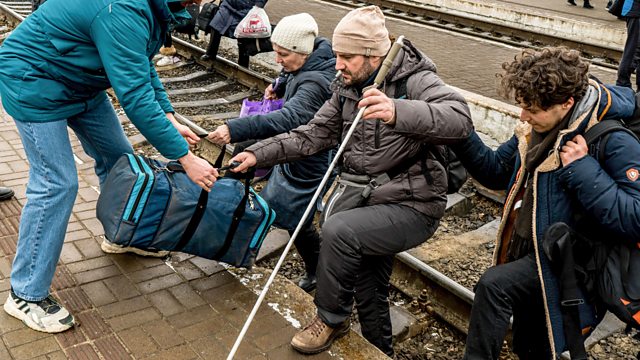
We speak to three Ukrainians, two of whom are visually impaired, about their efforts to help refugees cross the border into Poland to escape the ongoing war.
According to the United Nations, more than 2.8 million people have so far fled Ukraine because of the Russian invasion and amongst them are visually impaired people. Many have fled to Poland, where some could be offered the help they need by Olga Mahler and Andriy Butenko. Olga travelled nearly 10,000 miles across the world from Australia to help visually impaired people with food and accommodation once they have crossed the border into Poland. Olga attended a boarding school for the blind in the Ukrainian city of Kharkiv. Andriy Butenko is also from Kharkiv and is in Poland helping refugees cross the border into safety. We ask them about the work they are doing and how the visually impaired people they are meeting are coping with the ongoing war.
We also hear from Dr Vera Remazhevska in Lviv, who founded the first training and rehabilitation centre in Ukraine for children with visual impairments. There, she is currently helping visually impaired children, their families and other refugees that have travelled to the West of Ukraine to find safety.
Presenter: Peter White
Producer: Beth Hemmings
Production Coordinator: Liz Poole
Website image description: A group of three people are helping a visually impaired man to cross train tracks in Lviv, Ukraine. The visually impaired man has a cane in his left hand and is being helped up onto the train platform from the tracks. Another man wearing a blue outfit is helping him with his large duffle bag. The picture was taken in Lviv on March 5th.
Last on

More episodes
In Touch transcript: 15/03/2022
Downloaded from www.bbc.co.uk/radio4
听
THE ATTACHED TRANSCRIPT WAS TYPED FROM A RECORDING AND NOT COPIED FROM AN ORIGINAL SCRIPT.听 BECAUSE OF THE RISK OF MISHEARING AND THE DIFFICULTY IN SOME CASES OF IDENTIFYING INDIVIDUAL SPEAKERS, THE 麻豆社 CANNOT VOUCH FOR ITS COMPLETE ACCURACY.
听
听
IN TOUCH 鈥� Visually Impaired in Ukraine
TX:听 15.03.2022听 2040-2100
PRESENTER:听 听听听听听听听听 PETER WHITE
听
PRODUCER:听 听听听听听听听听听 BETH HEMMINGS
听
听
White
Good evening. 听When I was quite a young child, I can remember hearing people鈥檚 stories about war and thinking 鈥� how on earth would I cope in a situation like that as a blind person.听 Intense noise, not knowing where the danger鈥檚 coming from but knowing it could come from anywhere at any time.听 Well, I鈥檝e been lucky, it鈥檚 a situation I鈥檝e never had to face but for the people of Ukraine it鈥檚 happening now, either already or as an approaching terror.
听
It鈥檚 bad for everyone but for blind people, however competent they are under normal circumstances, there surely has to be a deep sense of vulnerability.听 Which is why many people, some of them blind or partially sighted themselves, have become involved in trying to help and, in some cases, to get visually impaired people out of Ukraine into neighbouring countries.
听
Someone who鈥檚 been doing exactly this is Dr Vera Remazhevska, she joins me from Lviv with the aid of her interpreter.听 Dr Remazhevska is an educationalist, who founded the first rehab centre for the education of blind and partially sighted children in Ukraine and she also has a daughter, who鈥檚 been blind from birth.
听
Dr Remazhevska, can you just explain, at the moment, what are conditions like at this moment in Lviv because I know you鈥檝e had trouble really just in the last day or so?
听
Remazhevska (translated)
For two weeks, actually, till this time we thought we were not in real danger because here we are very close to the European border, it鈥檚 only 70 kilometres to the European Union and also here we have a lot of refugees who come here from the eastern part of Ukraine.听 Some people go abroad, so they go further to the world but some people stay here, still hoping that everything will be fine and we will not be in danger here in the western part of Ukraine.听 But unfortunately, last night we had bombing and the western part was also in danger.听 In the morning we learned the information what was happening during the night, so it was the bombing of international centre of peacekeepers, just 40 kilometres from us.听 Thirty-five people died and more than 150 were wounded, injured, during that bombing.
听
White
Can I ask, Vera, how many children have come to Lviv from the various schools?
听
Remazhevska
All the schools, which we have in Ukraine for blind or visually impaired children, there are only seven schools for blind children and around 30 for children with low vision.听 The situation, we鈥檙e nearly the same all over Ukraine.听 Since the war began all of the parents took their children back home and in Kharkiv, only 20 children stayed at the school for children with low vision or blind children.听 So, I have managed to talk to the headmaster of a school in Odessa and in Kyiv, actually all the children are safe and the children, who managed to come here, in the west, also are safe but a lot of children, blind children, managed to cross the border and they went to the west, to the European Union.听 I also know a lot of workers who work with blind children in many European countries, like Poland, Romania, Croatia and a lot of children who came to Poland they are already sheltering and having some place where to stay, blind children, are in Poland but also in other countries as well.
听
White
Can I ask how the blind children are coping with the upheaval?
听
Remazhevska
So, today, I had a conversation with a little girl and I ask her 鈥� are you afraid 鈥� because today we had air strike and the syren was for five hours, so we had to stay in the shelter in a basement for five hours.听 And the girl said 鈥� no, it鈥檚 not 鈥� I鈥檓 not afraid at all because the bombs are not falling on your head.听 So, we have a great spring sunny day today, so the children are playing games, they are sliding and going in the garden.听 So, it feels like we have no war because the children are happy there.听 And their mums are crying 鈥� remembering how their houses and how their cities were bombed and now only ruins are left.听 It was a long way for them to come to Lviv and they managed to do it.听 But the children are happy, are happy to see the sun and so we have a big hope that everything will be fine in Ukraine.
听
White
Is there a long-term plan Dr Remazhevska?
听
Remazhevska
Yes, we have long terms.听 And now we are baking bread because it鈥檚 very necessary for all the people who are staying here.听 We are also making nettings for our soldiers and our army to be able to hide their positions and feel safety.听 And also, we are gathering and trying to help with medicine.听 The schools in Kharkiv for blind children, which was the oldest in Ukraine, is completely ruined, destroyed.听 I was talking to the headmaster of a school in Kviv and a school in Odessa, so they are holding their positions, they believe in the army, in the Ukrainian army, so they will not step back and we will survive and we will need to restore everything what was ruined.
听
White
Dr Remazhevska, thank you very much indeed for talking to us.
听
Well,听Andriy听Butenko is originally from Kharkiv, he鈥檚 currently in Poland helping people find the help that they need after crossing the border.
听
Andrei, first of all, tell us a bit more about the work that you鈥檙e doing.
听
Butenko
I am personally blind.听 I used to be up in school for the blind and now I work in a rehabilitation centre for the disabled people and members of their family.听 Now I鈥檓 in Poland and what I do, I help people from Kharkiv, disabled people, to get out of Ukraine to different countries.听 At first to Lviv and then from Lviv to Poland.听 It is very difficult because not so many people who can fix this problem because you need to find transport, you need to find money, you need to find people who will drive or who can help these people to get the train and out of train.听 And then they need to cross the border and crossing border, it鈥檚 some kind of quest now.听 Approximately, 400 disabled peoples we have managed to bring from Kharkiv to Poland already.听 Last group of people 鈥� blind people, people in wheelchairs 鈥� we collect them all around our city, so we found transport to take them to railway station.听 It is difficult because all time, all the day, bombs are coming to our city and if you go somewhere you don鈥檛 know if bombs will be there or not.听 If you just go to train and try to go, it will be not possible for you because everyone wants to go the train.听 So, we call the government and we ask them to give us special train so blind people could stay there.听 We have managed to solve this problem and then they were taken to Lviv.听 Before it鈥檚 very hard to stay them in Lviv because a lot of refugees are in Lviv, so you will not be able to find place to stay at night, maybe you will need to stay in the street.听 So, we found place for them and then we found buses and helped them to cross the border.
听
White
Can I ask you what made you want to help?
听
Butenko
Because I am from Ukraine, it鈥檚 my native country, war is now.听 I cannot take a gun and go but I can help different ways.听 And it鈥檚 my friends, people who I know, children 鈥� it doesn鈥檛 matter what, they are Ukrainians and I had to help them.听 If I do not do this, no one can.
听
White
You鈥檙e blind yourself, as you鈥檝e said, and you鈥檝e had to adjust to an unfamiliar situation very quickly.听 How are you doing because you鈥檙e taking鈥�
听
Butenko
Okay, okay I tell you one story.听 When I was in Kharkiv, I was in my home, on the first floor and they throw two bombs, like 300 metres, from our building.听 And I thought that it was to our building, the sound was very hard.听 It was scary.听 But all my life is under stress, so I was not afraid, I just thought how to be safe.听 So, I just hide under the table and wait.听 But psychologically it鈥檚 very difficult because now I鈥檓 here, I鈥檓 in a safe place and if I hear some loud noise I think it鈥檚 maybe starting of bombing.听 And what I see around, regular persons are very scared.听 A lot of them just sit under the ground and wait what happens just all day.听 I can go outside, even if I cannot see, I go outside and go to store, take food from there with somebody who can help me and bring it to different people who need this because I鈥檓 sure it will be okay with me, I just believe that.
听
White
Andriy听Butenko, thank you very much indeed.
听
Few people will have travelled as far as Olga Mahler, almost 10,000 miles in fact.听 Olga was raised in the Ukrainian city of Kharkiv, she subsequently went to Australia but now she鈥檚 in Warsaw to help visually impaired people who鈥檝e crossed the border.
听
Olga, it鈥檚 a long journey, what made you do it?
听
Mahler
I would do anything to be here and to help.听 When the war started and my family was following the news, we were saying there must be something we can do.听 And then, as we started seeing that there were hundreds and then thousands and more and more of refugees crossing the border and we saw those poor women with children lining up in the freezing cold for days and how they needed help.听 And we thought, okay, this is what we are going to do, we are going to help refugees.听 And, of course, being blind myself my heart is especially aching for blind people.
听
White
We heard Vera talking about the blind schools in Ukraine, you went to one of them didn鈥檛 you?
听
Mahler
Yes, I went to the school in Kharkiv, to the boarding school for the blind.听 And my family is still in Ukraine in Kharkiv, both of my parents are completely blind and they鈥檙e afraid to leave.听 The journey to Poland or even just to Lviv, is very difficult, it takes three or four times longer than normally it would take in extremely harsh conditions and not all blind people can join those organised groups, as Andriy has described.听 And they鈥檙e frightened, you know, like they are saying 鈥� at least here, I know where my kitchen is, I know where my toilet is.听 I go, as a blind person, to another country and what do I do?听 I don鈥檛 speak the language, I will have to potentially share a space with hundred other people and how will I find anything, how will I survive.听 And lots of families are with children.听
听
So, what I did, when we booked our tickets, I just posted on Facebook a call saying 鈥� hey guys, we are arriving and we are going to help blind people, especially families with children, we will just rent accommodation and we will take you in and look after you.听 That was our sort of like plan but the true plan evolved actually here because we were realising the fact that we can only stay here for so long.听 Our finances are limited because we鈥檙e using our funds, we are not backed up by any organisation or anything.听 We just sold some gold that we had for a difficult day, we figured, okay, that鈥檚 the time and that鈥檚 all we have.听 So, we were worried how can we actually help long term because the situation in Ukraine is long lasting plus even if the war stops, the cities are ruined, people have nowhere to go back.听 But we were very blessed.听 The very first day, we were here, there was a lady, as it turned out, to be Swedish, who had trouble communicating with someone Russian speaking and I have a masters degree in interpreting.听 We started talking and my husband and I discovered that she was a representative of a demand for action organisation, they bring buses of humanitarian aid from Sweden to Ukraine and then take buses of refugees back to Sweden and they really, really welcomed every blind person, every blind family that we were able to connect with them.听 And they prioritised them, they get them on the bus as soon as possible, they鈥檝e been really awesome.
听
White
So, you are the link in a way, you made the link between that organisation and you can steer other blind people towards them?
听
Mahler
Yes but I鈥檓 not only providing information, which I do a lot, my phone doesn鈥檛 stop the whole day but apart from providing information we鈥檙e actually renting several accommodations, feeding people, helping them with like if they need to buy some clothes, if they need to take their pets to vets.听 So, staying actually in the room today, I鈥檓 sick but my husband, at the moment, is looking after a family 鈥� the mum is sighted but she鈥檚 got two blind kids, actually from the Kharkiv school.听 So, he has put them in their apartment.听 He helped them to register with the Swedish organisation and they have a cat, so he鈥檚 taken them to the vets, to help the cat to get European documents.听 And quite frequently, he has to call me and say 鈥� hey can you please translate for me because the family doesn鈥檛 speak English 鈥� and my husband doesn鈥檛 speak Russian.听 The vet speaks Polish, they have lots of fun but they manage and unfortunately, I can鈥檛 say, like Andrei, that we can help hundreds of people, it鈥檚 beyond our capacity but we鈥檙e doing what we can and already in one week we looked after six families and provided all of them with long term solution that is going to be really good for them.
听
White
Can I ask you how the visually impaired people you鈥檙e coming across, how are they coping with all this upheaval?
听
Mahler
Well, it鈥檚 not easy and not seeing where to go, not understanding the language just is very difficult.听 So, my husband, sometimes, has to guide three blind people at the same time and he鈥檚 like I have only skills to guide one, just me鈥�
听
White
That鈥檚 you, yeah.
听
Mahler
Yeah, so he is learning.听 People kind of say we are scared to go on, people worry what waits for them in another country because it鈥檚 extremely difficult to be blind without language, to learn new things, start new life and at the same time they knew there was nothing promising for them, back their houses are bombed, the infrastructure is destroyed and it鈥檚 extremely dangerous for a blind person to be in a situation like that as well.
听
White
Can I just ask you a bit more about your parents?听 Your mum and dad.听 What do you think they鈥檙e going to do?听 You must be very worried about them.
听
Mahler
Well, today, I was able to find a phone number for them.听 I hope once they contact that number, they will be able to get some food delivered to them because it takes them three days to finally find a loaf of bread.听 The food is scarce, they live in the outskirts and being blind they don鈥檛 have means of safely travelling further than their direct area around them and it鈥檚 not safe in terms of war and everything.听 So, I hope, volunteers will look after them.听 At the moment they are refusing to go and I鈥檇 say that鈥檚 how it will go in future because they鈥檙e saying we will just die here rather than suffer somewhere else.
听
White
That鈥檚 very sad but you can understand it, I guess, because the future鈥�
听
Mahler
I do.听 Look, if I was them, they鈥檙e in their seventies, if I was completely blind, I didn鈥檛 have language skills, I鈥檇 probably would be too scared to go myself.听 I perfectly understand them.听 And I actually take my hat off in front of people, blind people, who make the move, I actually admire a lot and that鈥檚 why I鈥檓 here to help to make their life easier.
听
White
Olga Mahler, thank you very much indeed for talking to In Touch so movingly.听 And also our thanks to听Andriy听Butenko and Dr Vera Remazhevska for all the work that they鈥檙e doing.
听
That鈥檚 all for today.听 Next week, we鈥檙e planning to talk to the European Blind Union about what they鈥檙e doing and planning to do for visually impaired Ukrainians who are already in many other European countries.
听
But for now, from me, Peter White, producer Beth Hemmings and studio managers Mark Ward and Sharon Hughes, goodbye.
听
听
Broadcast
- Tue 15 Mar 2022 20:40麻豆社 Radio 4
Download this programme
Listen anytime or anywhere. Subscribe to this programme or download individual episodes.
Podcast
-
![]()
In Touch
News, views and information for people who are blind or partially sighted