1. Don't Call Me Legend
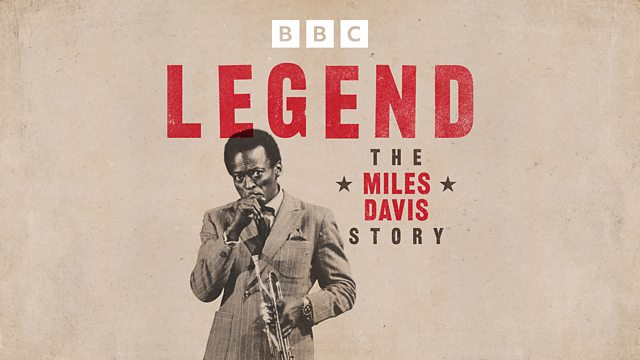
Jazz legend Miles Davis redefined the sound of modern music. Clarke Peters explores his 1944 arrival in New York as he began to find his voice as a revolutionary artist and leader.
Clarke Peters explores the life and legacy of a visionary artist whose relentless pursuit of the "new" often scorched his own life and the lives of those around him.
In September 1944, an 18-year-old Miles Davis arrives in New York with a trumpet in his hand and a secret mission. He may have first arrived in New York to take up a place at the prestigious Juilliard School, but in reality Miles was actually patrolling the smoke-filled jazz clubs of 52nd Street, chasing the high-speed sounds of his bebop heroes, Charlie Parker and Dizzy Gillespie.
Across the series, Clarke charts Miles鈥檚 ever-evolving artform, starting with this first great transformation of a legend - when the young Miles chose to step into the unknown, seize control of his own creative destiny, and begin his journey as a leader.
Narrator, acclaimed actor and longtime fan, Clarke Peters (The Wire, Treme, Da 5 Bloods) reveals the restless genius and radical evolution of Miles Davis. Growing up in a New York household where his father鈥檚 jazz records were the permanent soundtrack, Clarke was captivated by Miles long before he fully appreciated the man behind the music. Across five episodes, Clarke traces a 50 year odyssey of constant reinvention - from a teenage outsider chasing the bebop revolution in 1944 to a global icon who redefined what it meant to be Black, to be cool, and to be an artist.
Blending archival recordings and legendary tracks with fresh perspectives from a range of creators, the series reveals how Miles鈥� influence ripples far beyond the world of jazz. We discover how his "take no shit" attitude and aesthetic fearlessness impacted on the likes of Oscar-winning filmmakers, celebrated designers and music icons like Prince, Joni Mitchell, Sting and even bands like Radiohead, as well as generations of now also legendary jazz musicians that he championed early in their careers - John Coltrane, Bill Evans, Herbie Hancock, Ron Carter, Keith Jarrett and Marcus Miller, to name a few.
The series also grapples with the darker side of Miles鈥� legacy, including the domestic abuse that left a trail of pain for those closest to him and the substance issues that took a deep toll on his health. It asks difficult questions about how to regard an artist capable of creating the most sublime aesthetic statements while engaging in brutal behaviour.
Clarke Peters, whose own creative journey as an actor was sparked by Miles鈥檚 music, leads a searching investigation into a man who refused to be palatable, refused to be a "legend", and simply refused to stop moving forward.
Miles Davis Interview: From Jazz Talking by Ben Sidran, 1986.
The Arsenio Hall Show, Paramount, originally broadcast in 1989.
60 Minutes, CBS News. Originally broadcast in 1989
Featured tracks (in order of appearance)
鈥淪o What鈥� 鈥� Miles Davis
鈥淏lue in Green鈥� 鈥� Miles Davis (feat. John Coltrane & Bill Evans)
鈥淏itches Brew鈥� 鈥� Miles Davis
"Miles Runs the Voodoo Down" - MIles Davis
鈥淎gitation鈥� 鈥� Miles Davis
鈥淔lamenco Sketches鈥� 鈥� Miles Davis & Bill Evans
鈥淜o Ko鈥� 鈥� Charlie Parker
鈥淪alt Peanuts鈥� 鈥� Dizzy Gillespie
"Jivin with Jack the Bellboy" - Miles Davis
"Move" - Miles Davis
"Moon Dreams" - Miles Davis
"Boplicity" - Miles Davis
Presenter: Clarke Peters
Series Producer: Clem Hitchcock
Executive Producer: Rami Tzabar
Editor: Kirsten Lass
Production Manager: Emily Duffy
Music Consultant: Guy Barker
Additional Music: Guy Barker
Archivist: Simon Rooks
Script Consultant: Anne Harbin
Technical Production and Sound Design: Melvin Rickarby
Commissioning Editors for the 麻豆社: Dan Clarke and Matthew Dodd
A Loftus Media production for 麻豆社 Radio 4
Last on

More episodes
Previous
You are at the first episode
Featured
-
.
Broadcasts
- Sat 23 May 2026 10:30麻豆社 Radio 4
- Mon 25 May 2026 16:30麻豆社 Radio 4
Five life-changing things that shaped Bruce Springsteen

Laura Barton explains five key things that shaped The Boss鈥檚 life and music.
Podcast
-
![]()
Legend
The incredible life stories of artists who changed music forever.
Related Content