Main content
This programme will be available shortly after broadcast

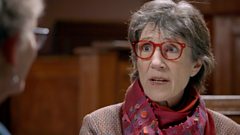
Dame Harriet Walter

In a journey from Whitehall to Italy and Australia, Harriet Walter discovers a colourful cast of ancestors, taking her from the debtor鈥檚 court to the opera house via Italian nobility.

Celebrated actor Dame Harriet Walter is TV hot property, having starred in global hits like Succession, Wolf Hall and Killing Eve. Harriet鈥檚 paternal family are well documented for founding The Times newspaper, but her maternal side is more of a mystery. She knows she descends from the Carandinis, an Italian noble family, and there鈥檚 a rumour one of them ended up in Tasmania and married an opera singer. But she鈥檚 starting with her mum, who had a job in naval intelligence in World War II which she never talked about.

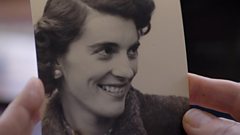
Harriet goes to Whitehall to meet historian Dr Helen Fry. She鈥檚 amazed when Helen tells her that her mother, Xandra Carandini Lee, played a pivotal role in the D-Day landings. Working in operational intelligence, Xandra鈥檚 job was to construct reports from intercepted German messages for the commanders and even Winston Churchill. Harriet is amazed her mother never talked about it and delighted to uncover this secret part of her life. She now wants to push further back on the Carandini line.

A call to a Carandini cousin directs her to Modena, in Italy, where Harriet finds the palazzo the Carandini family used to own, now housing a bank. Here, she meets researcher Maria Laura Frullini, who tells her that the Carandinis were one of the pre-eminent noble families in Modena, but Harriet鈥檚 three-times great-grandfather married below his rank, and so her direct line lost their inheritance, including the palazzo. Her great-great-grandfather Girolamo was educated just down the road at the College of Nobles.

At the college, Harriet learns that Girolamo arrived in 1813 aged nine. Records reveal that he was a talented dancer; Harriet is delighted as her first love was ballet. But what happened next? Maria Laura has discovered a cache of letters in the state archives sent by Girolamo鈥檚 uncles to his father after Girolamo joined the army and was posted to Rome and Naples. They paint a picture of a young man seduced by the many pleasures of the big cities. His uncles express concern about him gambling, getting into debt and keeping bad company. Their fears are realised when he鈥檚 dismissed from the army. Girolamo returns to Modena, but is caught up in a political uprising in 1831.

Historian Elena Bacchin tells Harriet that at this time there was a growing movement for an independent unified Italy. Modena was ruled by a duke who was allied to the Austrians, and Girolamo was on the side of the rebels who took control of the city. Their uprising was short-lived, and Girolamo and other rebels were forced to flee into exile. A letter places him in France asking for his belongings, including his wig, to be sent to him. Another letter from his uncle records that Girolamo led a wondering life in France and Great Britain but then completely disappeared. But Harriet knows the family story that he ended up in Tasmania, so that鈥檚 where she鈥檚 heading next.

In Hobart, Harriet meets historian Imogen Wegman, who tells her that Girolamo came to Tasmania, thankfully not as a convict but as part of a performing troop. Girolamo, or Jerome as he was now known, danced and sang onstage and also started a dancing school. It was in Hobart that he met his wife Maria. She was about 20 years younger than him and had come to Tasmania from England with her family. Soon, the Carandinis were performing together in Hobart鈥檚 newly built Royal Victoria Theatre. Harriet visits the theatre and meets academic Amanda Harper, who tells her that her great-great-grandmother won fame and acclaim as an opera singer, but, meanwhile, her great-great-grandfather Jerome had run into financial trouble.

To find out more, Harriet meets business historian Catherine Bishop, who tells her that Jerome was repeatedly insolvent - on one occasion having overstretched himself by putting on a ball for his dancing school students. Catherine explains that as Maria's star ascends, Jerome is in constant financial trouble.

Back at her hotel, Harriet hears from Maria Laura in Italy, who has found a letter from Maria to her brother-in-law in Italy. Harriet learns that Jerome returned to Modena to visit family but, tragically, died there, leaving Maria a widow.

Harriet ends her journey in Sydney in front of the opera house and meets opera director Constantine Costi. He tells Harriet that she should be proud of her two-times great-grandparents, as they were pioneers in building opera and performing arts culture in Australia. Harriet finally reflects on how pleased she is to have brought these ancestors to life, and what an experience it鈥檚 been to walk in their footsteps and feel a connection between their love of the arts and her own.

Release date:

57 minutes

Credits

Role Contributor
Presenter Harriet Walter
Narrator Angela Griffin
Series Producer Lucy Swingler
Executive Producer Colette Flight
Production Manager Demi McGarrell
Producer Rajveer Sihota
Director Mary Cranitch
Production Company Wall to Wall Media

Broadcast