28/06/2012
Doctors are developing a way of injecting oxygen directly into the blood of patients. Batteries that run off glucose in our bodies, manicuring turtles, plus why tomatoes have lost their flavour.
Injecting Oxygen
Hospital Emergency Room departments are increasingly sophisticated, with machines and monitors seemingly ready to take over the functions of a failing body.
But Dr John Kheir, from Boston Children鈥檚 Hospital, realised they weren鈥檛 enough when he was treating a patient with pulmonary pneumonia. Her lungs were filling up with blood; despite being put on a ventilator she couldn鈥檛 get enough oxygen into her bloodstream. The intensive care team raced to get her onto a heart/lung bypass machine, and did so in an extremely quick 20 minutes 鈥� but that wasn鈥檛 fast enough to prevent severe brain damage. Dr. Kheir explains his unlikely sounding idea.
Glucose batteries
This invention shows what incredibly sophisticated machines our bodies are 鈥� and how technology can give them a boost. Researchers in the US have developed a way to power that technology using the same energy source as the body 鈥� glucose. That could open the door to new implantable devices that don鈥檛 need batteries to be replaced or recharged. They simply generate the energy they need from glucose fuel cells, which tap into a lifetime鈥檚 supply of energy in our bloodstreams. In the first instance Professor Rahul Sarpeshkar from MIT has developed a proof of concept with a neural implant that could help paralyzed patients move their limbs. His research is published in the journal PLoS One
Turtle Spa
Scientific inspiration often comes from unlikely sources, but not often from the nail salon, but that鈥檚 exactly where Dr. Kate Mansfield, a scientist with the US Marine Fisheries Service discovered a new way to attach tags to turtles. She and her team wanted to follow newly hatched loggerhead turtles to help conserve the endangered species.
Tomato flavours
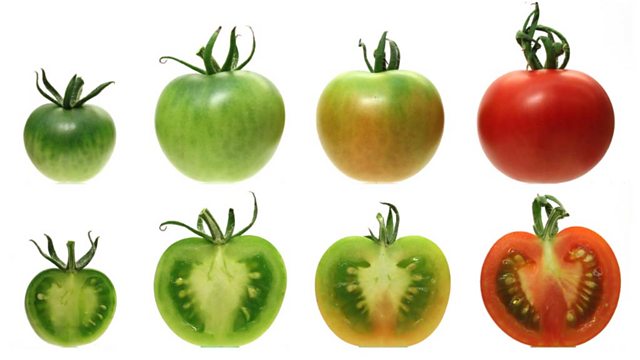
If you鈥檝e ever felt that the tomatoes that you get from the supermarket just don鈥檛 taste the way that they used to 鈥� some research in this week鈥檚 journal Science seems to back up your impressions. For about 70 years farmers have been choosing 鈥� or selecting for 鈥� tomatoes that start off a nice light green colour, and that ripen better on shop shelves. But it seems that also, inadvertently, meant for tomatoes with less flavour. Dr Ann Powell from UC Davis has worked out why this has happened.
(Image: Green and red tomatoes. Credit: S. Zhong and J. Giovannoni / PA Wire)
Last on

Broadcasts
- Thu 28 Jun 2012 18:32GMT麻豆社 World Service Online
- Fri 29 Jun 2012 03:32GMT麻豆社 World Service Online
- Fri 29 Jun 2012 10:32GMT麻豆社 World Service Online
- Sat 30 Jun 2012 21:32GMT麻豆社 World Service Online
- Mon 2 Jul 2012 01:32GMT麻豆社 World Service Online
Podcast
-
![]()
Science In Action
The 麻豆社 brings you all the week's science news.