Mozart: Symphony No. 40
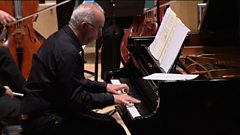
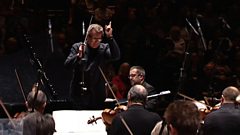
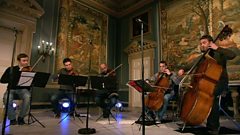
Charles Hazlewood explores the thematic and harmonic intricacies of Mozart's Symphony No. 40 in G Minor with his period instrument orchestra The Mozart Collective.
(The complete performance is not available for rights reasons)
Wolfgang Amadeus Mozart (1756鈥�91)
Symphony No. 40 in G minor (1788)
1 Molto allegro
2 Andante
3 Minuet and Trio: Allegretto
4 Allegro assai
Mozart鈥檚 Symphony No. 40 鈥� the middle one of the great final trilogy that he composed in the space of three months in the summer of 1788 鈥� is a work that has always made a strong impact on its listeners. The trouble is that no two impacts have been quite the same. In the mid 19th-century one Russian critic heard in it 鈥榯he agitation of passion, the desires and regrets of an unhappy love鈥�, yet Robert Schumann commended it for its 鈥楪recian lightness and grace鈥�. For the great 20th-century Mozart scholar Alfred Einstein the symphony was 鈥榟eroically tragic鈥�, while two of his colleagues thought it was 鈥榳ritten in [Mozart鈥檚] very blood鈥�; others seem to have appreciated above all its connections with the world of comic opera.
Of course, it is all these things, and quite a few more besides. For Mozart鈥檚 genius lay in his protean variety, in the way he could find a seemingly boundless range of subtle musical meanings and bring them together in an ever-changing but coherent whole. The first impression left may be of formal correctness and friendly elegance (which is no doubt why such a profound piece as this can so often be considered 鈥榚asy listening鈥�), but within lies a whole world of expression in which every facet, however fleetingly revealed, is recognisable yet indefinable, ungraspable. No wonder a few measly words will not capture it!
The 40th Symphony鈥檚 most miraculous music occurs at the very opening, an unusual one for the time, in which the accompaniment precedes the tune (the impression this made on later composers can be heard in such works as Beethoven鈥檚 鈥楥horal鈥� Symphony, Mendelssohn鈥檚 Violin Concerto and several Bruckner symphonies). Within Mozart鈥檚 own works there is a faint similarity to Cherubino鈥檚 breathless aria of adolescent longing in 鈥楾he Marriage of Figaro, but the restless melody which enters here is of an altogether nobler cast, a moment of uniquely Mozartian inspiration which on its own is enough to make this work an unforgettable and haunting one. It also has a generating role, however, particularly in an insistence on the pairing of adjacent notes which, with its yearning, 鈥榣eaning鈥� character, becomes a telling feature of the movement 鈥� and of much of rest of the work as well. The movement鈥檚 second theme, a drooping one introduced by the violins and answered by the woodwind, introduces a more cheerful flavour 鈥� this passage really could come from a comic opera 鈥� but, almost before the listener notices, the material of the opening returns to round off the first section, drive on into the central development and later round the movement off on a note of unresolved urgency.
The Andante opens in a mood of relative repose, but soon (and with a growing sense of disquiet) the tripping paired notes which have appeared briefly in its initial theme begin to emerge as the movement鈥檚 propelling force, assuming many guises as the music progresses, from jaunty to angry and from achingly beautiful to frivolous.
After this the Minuet is darkly driven, with only temporary relief offered by the pastoral calm of the central Trio section, before the work plunges into its headlong finale.
The rocketing main theme of the concluding Allegro is a stock device of 鈥榮tormy鈥� 18th-century symphonies, but this movement is far from a stereotypical creation. Mozart uses the theme to point the music in all directions, the most remarkable being at the beginning of the central development, where the theme鈥檚 rhythm is disjointed and its melodic outline distorted almost to breaking-point. It is a shattering moment, yet it grows organically from what has preceded and leads naturally into what follows. Such is genius.
Programme note 漏 Lindsay Kemp
Duration:
Credits
| Role | Contributor |
|---|---|
| Composer | Wolfgang Amadeus Mozart |
This clip is from

Featured in...
![]()
Discovering Mozart—Composer of the Week
Listen to programmes examining the life and works of Wolfgang Amadeus Mozart.

More clips from Discovering Music
-
![]()
Watch an analysis of Debussy's La mer—Debussy's La mer
Duration: 41:43