Yeovil, Somerset: The Birthplace of Westland
The grate that led to a lucrative enterprise
A series of unloved, old redbrick industrial buildings and a bus depot beside a noisy dual carriageway seem an unlikely reminder of the sacrifices of war. But in the 21st Century the old Nautilus Works at Reckleford are a physical reminder of Yeovil鈥檚 World War One heritage.
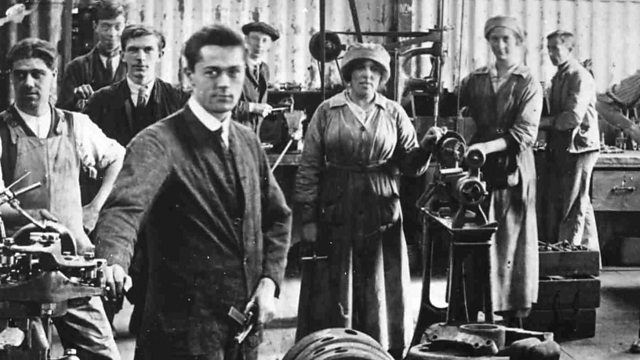
It was within the walls of these factory units that many of the town鈥檚 women escaped domesticity or a life in service when they donned overalls and went to work in heavy industry for the good of the nation. Today, what鈥檚 left of the site is far from impressive but what remains links us to a time when the Works were a place of great productivity and pride for the people of this south Somerset town.
The story of the Nautilus Works, and its unlikely name, go back to the early 1880s when James Bazeley Petter was establishing his Nautilus Stove Company, manufacturing an early type of radiator called the Nautilus Grate. James was part of a prominent local family and from the dynasty which gave its name to the worldwide engineering giant, Lister Petter. But why would a West Country firm making grates and kitchen ranges adopt such a name?
Nautilus was the mighty submarine captained by Nemo in Jules Verne鈥檚 classic story 鈥楾wenty Thousand Leagues Under the Sea鈥�. The book was published just ten years before Petter started his business in Yeovil but it鈥檚 unlikely to have been the inspiration for his company name. Far more likely is the theory that the inside of Petter鈥檚 newly designed fire grate resembled the spiral shell of the nautilus; a deep sea mollusc.
The Nautilus Works opened on the three acre site at Reckleford in 1912 for the manufacture of oil engines. This was state of the art industry for the Edwardian era. Alongside the new assembly shops and machine rooms were purpose-built offices, a foundry and a generating station which would soon be providing power for Yeovil鈥檚 first electric street lights.
But two years after the works opened, war broke out and like thousands of firms up and down the country efforts at Reckleford were transferred to war work. It became a munitions factory and by 1915, tens of thousands of shell casings were being made at Petter鈥檚 plant.
Photographs from the time show staff standing proudly next to neat triangular piles of metal casements. In the background winches and work benches can be seen; this was the noisy, grease-covered hardware of wartime munitions work. Fascinatingly, a hundred years later some of those winches and at least one of the benches remain in place, like ghostly figures from a bygone era.
The ageing factory buildings made headlines in 2013 when it was claimed that they faced possible demolition because no tenants could be found to take them on.
However, there is another reason why the Nautilus Works deserve greater recognition. Yeovil鈥檚 biggest employer and the town鈥檚 best-known asset owes its very existence to James Bazeley Petter鈥檚 industrial vision. Westland Aircraft (now AgustaWestland) began life in the early years of the 20th Century when Yeovil鈥檚 first aeroplane was made at Reckleford. In 1915, Westland officially split from Petter鈥檚 to set up as a separate enterprise. Within just a couple of decades, the economy and the fortunes of Yeovil would depend heavily on the ups and downs of the local aero-makers.
And it all began with a Nautilus grate.
Location: The old Nautilus Works, Reckleford, Yeovil BA21 4EJ
Image: Staff at the Nautilus Works, courtesy of the Community Heritage Access Centre
Duration:
This clip is from

Featured in...
![]()
Latest stories from across the UK—World War One At Home
A selection of stories from At Home's November release.
![]()
Innovations—World War One At Home
Where war was the mother of invention
![]()
麻豆社 Somerset—World War One At Home
Places in Somerset that tell a story of World War One
![]()
Technology—World War One At Home
Wartime pioneers and innovation
More clips from World War One At Home
-
![]()
The loss of HMY Iolaire
Duration: 18:52
-
![]()
Scotland, Slamannan and the Argylls
Duration: 07:55
-
![]()
Scotland Museum of Edinburgh mourning dress
Duration: 06:17
-
![]()
Scotland Montrose 'GI Brides'
Duration: 06:41