Canon Angela Tilby - 05/01/2022
Thought for the Day
Good morning. Schools are back this week, attempting a return to some sort of normality in spite of masks and cautions. On this programme on Monday there was discussion about the purpose of education; how to prepare our children for the next fifty years. As I listened, I had the unnerving thought that much the same discussion was going on fifty years ago. How do we prepare our children for an increasingly competitive, mechanised and digitalised working environment?
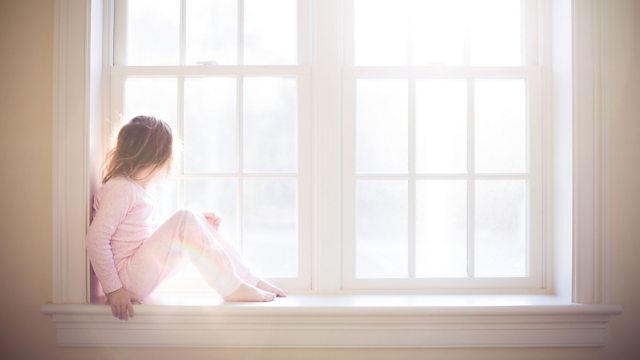
It鈥檚 all very goal-focused, as though we could programme our children to become what we want them to be. Rowan Williams once suggested that one of the problems of our culture was our impatience with the whole idea of childhood as a time of indeterminacy. It is after all an extraordinary fact of evolution that humans take so long to mature, no other animal takes more than a decade to develop from embryo to teenager. And much of it is rather aimless. Lessons, yes, but also sleep, fooling around, bursts of activity, boredom.
Perhaps it is intended that we know very little of the childhood of Jesus. After his birth there is just one reference in the Gospels to his teenage life, and then nothing, until he strides onto the scene at the age of thirty. His childhood experiences remain a mystery, cropping up only in later legends which never made it into the Bible.
But childhood does have its place in The Bible. God calls his people children. We pray the Our Father. Like any parent God finds his children infuriating, but he also recognises that they need a lot of time to grow up. There are the forty years in the wilderness where they mess about, ignore the rules he gives them and call out both God鈥檚 punishment and God鈥檚 forgiveness. Patience is important. We want our children to be good, but we also need to cut them some slack, to suspend the demands we have to take on in adult life. So much of our parenting and education is based on notions of adult input and child progression: key stages, competences learnt and skills mastered. These are important of course, but not at the expense of the unstructured aspects of childhood.
Many schools proclaim their values on websites and notice-boards 鈥� but I suspect that real moral learning does not happen only in the classroom but in the playground and in the streets. That afternoon rush when school comes out, the laughter, the dash to the corner shop, the rowdiness at the end of the school day. Relief, release. It鈥檚 in these spaces that children learn who they are and how to be with themselves and others.
In the end, the adults can only bring their gifts to the crib: time, knowledge and patience, and then let the children get on with it.
Duration:
This clip is from

More clips from Thought for the Day
-
![]()
The Right Reverend Dr David Walker - 08/06/2026
Duration: 02:54
-
![]()
Shaykh Ibrahim Mogra - 06/06/2026
Duration: 03:06
-
![]()
Rev Dr Sam Wells - 05/06/2026
Duration: 03:19
-
![]()
Dr Rachel Mann - 04/06/2026
Duration: 02:57