Estonia's singing revolution
In 1991 Estonians regained their independence after decades of Soviet occupation 鈥� not with guns or tanks but with songs. T玫nis M盲gi became the voice of the 鈥楽inging Revolution鈥�.
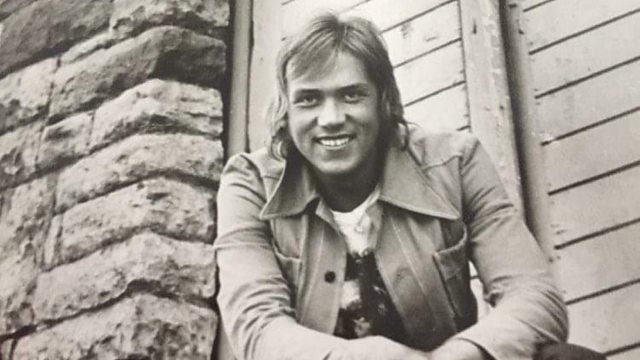
The Estonian rock musician T玫nis M盲gi once attracted huge crowds across the USSR with a string of disco hits and a song glorifying the 1980 Olympic Games. He was a poster boy for clean cut Soviet youth with his blond hair and cheeky smile.
But in 1987 T玫nis returned to his native Estonia to write his own songs, in his own language. Times were changing. Mikhail Gorbachev鈥檚 glasnost or openness policy allowed Estonians to talk about things which had been taboo for decades. T玫nis tells Lucy Ash that he could smell freedom in the air.
Like its Baltic neighbours, Lativa and Lithuania, Estonia was independent between the world wars but suffered devastating losses when it was invaded by Stalin then by Hitler's troops and then reconquered by the Red Army.
In the tiny country of 1.3 million, many resented the Russians and longed to escape from Communist rule. People worried that their language and culture were disappearing and they wanted to promote Estonian nationhood, particularly through music. With his rock anthem Koit (Dawn) and other songs, T玫nis became the voice of a generation of Estonians, the voice of the Singing Revolution.
Producer: Lucy Ash
Translator: Tiina Wilder
Photo: T玫nis M盲gi in 1987
Last on

More episodes
Previous
Next
Broadcasts
- Fri 15 Jan 2021 08:50GMT麻豆社 World Service
- Fri 15 Jan 2021 12:50GMT麻豆社 World Service
- Fri 15 Jan 2021 18:50GMT麻豆社 World Service except East and Southern Africa & West and Central Africa
- Fri 15 Jan 2021 23:50GMT麻豆社 World Service East and Southern Africa & West and Central Africa only
- Sat 16 Jan 2021 03:50GMT麻豆社 World Service except Australasia
Podcast
-
![]()
Witness History
The story of our times, told by the people who were there