Creative construction: A fairer deal for the creator economy
Most creators still struggle to be seen, credited and paid fairly. We're developing DLT鈥憄owered prototypes to make things more transparent and equitable.
Sign up to the PHARE newsletter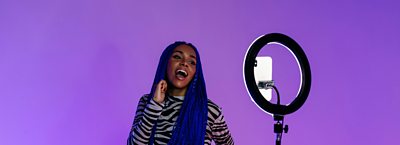


鈥淯nder the next Charter, we would like to be able do more to represent the whole of the UK - it is vital in staying relevant to and being valued by audiences. This includes鈥nnovation in how we tell stories which represent audiences [such as] working with creators around the UK to give a voice to more locations and communities - and developing new formats, exploring user-generated and creator content鈥�
鈥淲e want to help creatives of all disciplines own, monetise, and collaborate on content. We will democratise the creator economy and inspire people to start their creative journey in a way that is visible, fair, and equitable.鈥�
Independent content creators gave us , , and .
They are also the primary drivers of growth in the media industry. There are almost 300 million independent creators globally, from bloggers to make-up artists, who monetise their skills directly with their audiences. In the UK, Europe鈥檚 largest creator economy, YouTube creators alone have contributed over 拢2.2 billion to the UK economy in 2024.
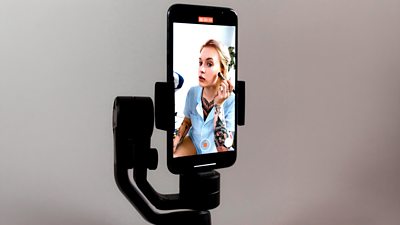
Some of these creators are household names, even to those who don鈥檛 spend much time on YouTube. , for example, is hosted by , has amassed over 638 million views and 3 million subscribers on YouTube. Dimoldenberg has hosted celebrities like Billie Eilish and and is assumed to have a multi-million pound fortune, which she鈥檚 earned and .
Unfortunately, the system isn鈥檛 working for everyone. The top 1% of content creators earn millions through ads, sponsorships, subscriptions, and merchandise. For the remaining 99% who earn , the picture is much more challenging.
Many struggle with opaque monetization systems that often preference top artists rather than smaller or newer creators. That makes it difficult for creators to get discovered and to earn living-wage levels of ad revenue for their content. The algorithms that drive third party platforms' success often . It鈥檚 in Spotify鈥檚 interests to serve up content you鈥檝e already demonstrated an interest in. Why do something different? This is a problem both for new artists who can become 鈥榰ndiscoverable鈥� and for people who tire of hearing or reading .
Since ChatGPT exploded in 2023, new problems have emerged. Both legacy media organisations and independent creators find themselves with little visibility into how their content is used, for what purpose, and with few opportunities to monetise their IP in this new paradigm.
麻豆社 Research & Development has been exploring how emerging technologies can meaningfully address the structural challenges facing today鈥檚 creator economy - not just for the 麻豆社鈥檚 own purposes, but for the wider creative industries it serves and champions.
麻豆社 R&D鈥檚 Future World Design (FWD) team focuses on translating research into real-world impact through partnership, and is working across four interconnected problem areas:
- Attribution - ensuring creators get proper credit when others use, remix, or reference their work
- Rights - giving creators clarity and control over the licensing of their intellectual property, including in AI-generated contexts
- Creator tools - reducing the friction and complexity that independent creators face in running their creative practice as a business
- Discovery - building fairer mechanisms for new and diverse voices to reach audiences without being buried by algorithmic bias - an effort that began during with Orbit - a discovery tool for emerging artists, powered by 麻豆社 Introducing.

Central to this work is - the same - as infrastructure for a more transparent and equitable creative economy. Unlike traditional centralised databases controlled by a single platform or rights organisation, DLT offers a shared, tamper-resistant record of who made what, when, and on what terms. For creators, this could mean a single source of truth for rights ownership, an auditable trail of the use of their content, and automated, near-instant payments when others meet the licensing terms, without the need to trust any single intermediary.
Building on this research foundation, FWD are developing PHARE, a prototype platform designed to explore how these technologies can apply specifically within the music industry. PHARE is not a finished product; it is a carefully designed experiment, built to test assumptions, surface real-world friction, and identify where technology can genuinely simplify the lives of working musicians.
The music industry is, in many ways, a microcosm of everything that is broken in the broader creator economy, and the ideal place to stress-test solutions.
For most musicians, the journey from creating a track to being fairly compensated for it is astonishingly complex. Songwriting splits - the agreements that determine who owns what percentage of a composition - are often informal, undocumented, and disputed later. Royalty collection involves navigating a fragmented ecosystem of collecting societies, distributors, and streaming platforms, each operating on different timescales, with different rules, and with limited transparency. A musician licensing their work for a sync placement in an advert or TV show may wait months to understand whether the deal they agreed to was honoured, let alone whether it was fair in the first place.
PHARE is being designed to explore whether it is possible to reduce this complexity dramatically, and whether a cleaner, fairer on-ramp into the industry is achievable.
Early exploration has surfaced several consistent themes. Creators do not lack talent or ambition; they lack infrastructure. The tools available to independent musicians are either built for major label scale, too expensive for early-career artists, or simply not interoperable with one another. Many musicians report spending as much time navigating administrative complexity as they do making music - a poor use of creative energy and a significant barrier to sustainability.
There is also a clear trust deficit. Artists frequently do not know whether the data underpinning their royalty statements is accurate, whether their content is ingested into AI training datasets without consent, or whether the relevant rights bodies correctly register the splits agreed in a studio session. Transparency (or the lack of it) has emerged as the single most consistent source of anxiety across the creator journey.

PHARE鈥檚 prototype work suggests that a DLT-backed infrastructure, combined with intuitive creator-facing tooling, could address many of these pain points, not by replacing the existing industry, but by giving creators the visibility and agency they currently lack.
The creator economy is not a trend. It is a structural shift in how culture is made, distributed, and valued, and it is happening with or without the institutions that have traditionally shaped the media landscape. The question for the 麻豆社, and for the wider industry, is whether that shift happens fairly.
PHARE represents 麻豆社 R&D鈥檚 contribution to that question - a rigorous, prototype-stage exploration of what a more transparent, equitable, and creator-centred infrastructure might look like. It does not claim to have all the answers. It does claim to ask the right questions, in collaboration with the people most affected by the problems it is trying to solve.
The next step is to take those questions, and our early findings, into the world and into conversation with the creative community.
That is why 麻豆社 FWD will be at this year. SXSW brings together the people who are shaping the future of music, media, and technology, exactly the audience this work is intended to serve. Our goal is not to present a finished solution, but to stress-test our thinking with working creators, technologists, and industry partners; to gather the perspectives and lived experience that will sharpen what PHARE becomes next; and to build the relationships that will help bring it to scale.
If you鈥檙e a creator, technologist, or industry partner who believes the system should work better for the people who make the content that drives it, Edward Fotheringham and Joseph Amoah from the PHARE team would like to hear from you.
We’re partnering with forward-thinking teams inside and outside the 麻豆社 on the Future World Design and we’re always looking for partners with bold ideas for strategic commercial collaborations at the intersection of media, tech and culture.
If you have a commercial opportunity we should be working on next, contact us at fwd@bbc.co.uk.
Search by Tag:
- Tagged with Content Formats Content Formats
- Tagged with Features Features