My Ain Native Toun
By David Herbison
Since I was a boy in my ain native toun,
There’s naething but bigging and pu’ing wa’s doun;
The streets are grown wider, the houses are high,
And half o’ their windows peer into the sky;
Their doors wad let in ony cart frae the street,
Their owners ne’er think o’ a shoe for their feet,
They a’ maun hae boots ere they venture abroad;
Their claething appears to an auld body odd;
How changed frae the times when our forefathers lay
In houses weel streekit wi heather and strae!
Happy hames, happy hearts, we had ilka place roun’,
Whan I was a boy in my ain native toun.
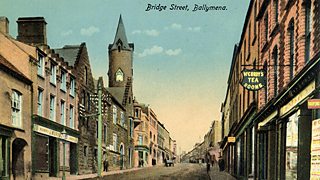
Whan wandering wi’ ither sculeboys to the scule,
Wi’ piece in my pocket, my satchel and rule,
Nae pride was amang us, nae boastin’ o’ gear,
We shared wi’ ilk ither the apple and pear;
We ran at the ring, and we play’d at the ba’,
And parted in peace by the auld castle wa’;
We then helped the poor, as we always should do,
In pleasure to wander life’s weary way through;
But times now are changed – the poor’s no’ helped ava,
They’re looked on by rich folk as nae folk at a’!
Ambition and folly wad imp at the croun,
Since I was a boy in my ain native toun.
The auld clock is gane wi’ its time-honoured face,
And oh, what a queer thing appears in its place!
It aften strike’s twal, whan it shudna strike twa –
I wish frae my heart the daft thing was awa!
Its belfry hangs out as if poor folk to mock,
The least blast o’ win’ maks the tiny thing rock;
Wha’ doubts o’ its height an’ its hame in the sky –
But oh, what a change to an auld neighbour’s eye:
Tis like a’ things else that hae twa faces got,
Unstable and no’ to be trusted for aught:
Deceit and deception fill ilka place roun’,
Since I was a boy in my ain native toun.
The castle is gane, and its garden destroyed,
Nae langer about it our Easter’s enjoyed;
Its banks and its braes are a’ weedy and fogg’d,
And felled is the tree whare the sodger was flogg’d:
There’s naething I see has the same hue it had
Whan I was a boy in the arms o’ my dad,
Except the wee house whare the poet was born,
It still braves the blast o’ the wild wintry morn,
Was’t no’ for it now, as I saunter alang,
I wad scarce know the place whare I first sung my sang;
Its chimneys and windows and scraw-covered crown
Are a’ that I see o’ my auld native toun.
I aft look and wonder what folk wad be at,
That scamper about ‘neath a fairy-formed hat;
They winna sit down as our forefathers sat,
On cauld flags o’ whinstane to hae a while’s chat,
Their seats maun be cushioned, or sit they’ll not sit,
At them I aft laugh till my sides like to split;
Nae milking, or baking, amang their wives noo,
Nor knitting, nor spinning, nor carding o’ woo’;
In pride they ride out in their cars and their coaches,
As brilliant as stars, wi’ gold bracelets and brooches,
Cloak, apron, or hood, or a short-bodied goun,
Wad now be disowned in my ain native toun.
Our widows and maidens now daily appear
In dress only fit for the male sex to wear –
Shawls, bonnets, and caps are cast off in disgust,
As things insufficient to show off the bust.
Broad hats and white feathers their heads must adorn,
Or better, they say, they had never been born;
What shame ‘tis to see them now walking the street,
With plumes on their heads, gutt-pe’cks to their feet;
Ilk thing that’s about them shows plainly to a’
That’s modesty’s fled frae them far, far awa’!
Nae wonder they wander in vain up and doun,
Men to find to their mind in my ain native toun.
O Woman! thy beauty has aft charmed my eye,
When dark o’er my path scowl’d the wild wintry sky,
Ere pride led you off from the soul-cheering ways,
How blest have I been singing sons in thy praise, -
And still you could cheer me and charm me along,
And wake in my bosom the spirit of song;
But not while you wander so like a buffoon,
Laugh’d and mock’d at by a’ the auld folk in the toun;
Cast the hoop from thy frock and the beads frae thy hair,
And modestly kneel where the good go to prayer,
And my auld harp again will thy praises send roun’
The streets, lanes, and squares o’ my ain native toun.
What splendid big houses, what beautiful banks,
Whase inmates get rich wi’ nae toil to their shanks;
Bank notes o’ a’ sizes and siller are there,
By which they contrive to mak’ muckle – aye mair;
Whan offer’d a sovereign they’ll prove it to be
Light, light in the scale and a shade oure wee,
But gang back again for a sovereign to them,
They’ll gie you, they say, what nae man wad condemn,
Although they are sure ‘tis the very same ane,
They gained the grot by ere frae you it was ta’en;
Sic wark canna stan’, it maun fade awa soon,
Or sad times we’ll hae in my ain native toun.
When we had laigh houses, laigh windows, and doors,
Our shaps werna filled up wi’ shapboys in scores;
Our weights were a’ honest, our measures were just,
And faithfu’ and firmfu’ we stood by our trust;
A’ things that we bought were aye paid on the spot,
In selling, our conscience was never forgot;
And a’ times o’ night for our hames we could turn,
Nor find aught to injure or cause us to mourn;
In thought, word, or deed, we ne’er gave an abuse,
Our claithing was plain and esteemed for its use;
The heart that wad dupe was despised up and doun,
When I was a boy in my ain native toun.
Although I’m grown auld, and my hair is turned grey,
I fear lest their folly might lead me astray;
But I’ll do the best, as I ever hae done,
To run the same path that my forefathers run;
Guile ne’er was amang them, deception nor strife,
Their boast – only boast – was a pure happy life;
For difference o’ birth, they ne’er quarrel’d ava.
They pray’d to ae God, and in peace pass’d awa;
Methinks now I hear them in dreams cry “beware,”
“Pride never shall enter the high house o’ prayer;”
What gewgaws and fashions are sought up and doun,
Since I was a boy in my ain native toun.
We then had nae drapers the poor to oppress;
We wove our ain wab and we drank our ain glass,
And aye had shilling to spend or to spare,
The heart to mak’ glad that seemed weary wi’ care;
Contented we were when we had in our bag
A very fine score, or a six hundred rag;
Our sweethearts aye met us wi’ joy in their face,
Mirth reigned in their pride, and made happy ilk place;
Our coats were hame spun, and our sarks were the same,
And warmly we welcomed a frien’ whan he came;
Our rent was aye paid whan the rent day came roun’
When I was a boy in my ain native toun.
Until we ceased selling our claith in the hall,
Nae want was amang us our peace to enthrall,
For a’ kind o’ wark we had plenty o’ cash,
And merchants that ne’er cut a bit o’ a dash;
They were perfectly honest, kind, friendly, and true,
And knew weel the wark they cam’ weekly to do;
The house-money never went into their fabs,
It went to the house that took care o’ our wabs!
And wad it still go for the use it did then,
The weaver wad pay’t like a dash o’ his pen;
But, oh, what a change on a’ things has cam’ roun’
Since I was a boy in my ain native toun.
When we could get a’ things we likèd to buy,
Without wandering up amang horses and kye;
Pears, apples, and nits aft induced us to eat,
As blithely we strayed through the clean-scraped street;
But now, cart, nor car, nor a fruit-covered stall
Appear in the causeway, or hang at the wall;
Contentment and pleasure are banished awa,
Want raves through the street like a bird through the snaw,
Care rings frae our bosom the sorrow-fraught tear,
And summer appears like the wane o’ the year;
The star of our freedom has sunk lowly doun
Since I was a boy in my ain native toun.
Whan rain fa’s in torrents, and win’s whistle shrill,
For apple or pear wha wad gang to the hill;
The fruit there may rot, and the stallwoman froun,
And curse them that drove them afar from the toun!
In vain they look out for a merchant to buy,
Their stalls are upset amang horses and kye,
The packman is sad, and the broguemakers rail,
And few lend an ear to the auctioneer’s tale;
Our markets are spoiled every place, it appears,
And young hearts are seared with oppression and fears;
The changes that’s made makes me sing a sad tune
Since I was a boy in my ain native toun.
‘Twas heartsome to see on a Saturday morn,
Before the red clouds o’ their tassels were shorn,
Our blithe bonnie lasses come into the toun,
A’ tidy and braw in their hame-woven goun;
And heartsome to see the big bunch in their arms,
Of which they were proud as they were o’ their charms;
And while it was praised, paid, and carried awa,
Their smiles and their glances enlivened us a’;
What courting and talking in love we enjoyed
Whan a’ at thw heel and the reel were employed,
Our hearthstanes were cozie, the sang was sang roun’,
When I was a boy in my ain native toun.
Oh had I the power the past to restore,
The reel wad still crack, and the spinning-wheel snore,
Mill-yarn wad sink doun as it never had been,
Trade flourish as fair as it ever was seen;
Distress and oppression flee far frae our view,
Our hamlets rejoice and their beauties renew;
The profligate band that brought want to our door
Should labour or starve on a far foreign shore;
A wab in a steamloom should never appear,
Our country to steep in affliction and fear;
Peace, pleasure, and plenty, and happy hearts roun’,
And times wad revive in my ain native toun.
A’ things now aboot us appear for the worse,
Our feedin’ and cleedin’ is no’ worth a curse!
We’re now in the hands that our spirits hae crushed –
To a’ kind o’ hardships were driven and pushed;
On fears, tears, and sighs aft our supper is made,
Since we were deprived the fair fruits o’ our trade;
Black, gloomy, and sad is the prospect in view –
Oppression and want is our torture and screw;
Could we do as we did in the years that’s awa’,
Full many a rotten trunk roun’ us would fa’;
Auld trade and auld times wad mak’ happy hearts roun’,
And a’ wad rejoice in my ain native toun.
The men we hae got to preside o’er the law
Know little or naething aboot it ava;
They ne’er hae read Blackston nor Coke on a case,
And yet they are thought very fit for the place,
And nae doot they are in a wee toun like this,
Whare rich folk can say or dae naething amiss;
They hae made us a’ fools, aye and fools we will be,
As long as we’re no independent and free;
Nae bending nor crouching when I was in youth,
A’ men were thought equal that stood by the truth;
Vain proud empty fellows were never thought soun’
Whan I was a boy in my ain native toun.
If twa honest neighbours noo chance to dispute,
It canna be ended without a law suit!
But ere half aboot it is settled and paid,
They find by their folly what fools they are made!
The lawyers will pocket their cash wi’ a smile,
And laugh in their sleeve how they did them beguile!
What peace we wad hae if their number were less –
Their name is enough godly folk to distress;
For fraud and deceit they outrival the Jew,
The devil himsel’ couldna’ match sic a crew!
For want o’ the power their pride to pu’ doun,
They fatten and feed in my ain native toun.
How wae is the spectacle comes in our view,
When ony unfortunate creature gets fu’,
He’s hauled to the bridewell and closed in a cell,
When a’ things around him are darker than hell;
Nae care for his comfort, nae care for his life,
Nae pity is shown for his weans or his wife;
His sighs and his sabs are unheard by the crew,
Wha’s look wad make Satan turn fearfully blue!
Meat, drink, nor a blanket he never sees there,
Benevolence flees frae the place in despair;
There tyranny reigns wi’ hyena-like froun,
Since I was a boy in my ain native toun.
Could our forefathers rise frae the grave whaur they lie
And see the steam-engine at speed passing by,
They surely wad say that the foul fiend himsel’
Was stealing awa’ the big bellows o’ hell;
Or could they be here on a wild wintry night,
Whan Luna is wrapped in her shroud frae our sight,
And see the gas light in its glory burst out,
Dispelling the danger o’ darkness and doubt,
Again they wad say owercome wi’ surprise,
That we had brought doun a’ the stars frae the skies,
And closed them in lanterns to scatter light roun’
The streets and the lanes o’ my ain native toun.
Yon big naked house standing out on the moor,
Is filled up with poor folk a’maist to the door;
They’re kept there, and fed there, as fowls we wad feed,
And buried – half buried – before they’re cauld deed!
Nae luck we ha’e had since it showed its face there,
Our craps were a’ blighted despite o’ our prayer;
‘Tis a curse to the land, and a curse to the poor,
Wha still were content wi’ the bit at our door;
Wad some friendly blast blaw it far o’er the plain,
We a’ wad rejoice and be happy again;
Our taxes wad fa’, and the glass sparkle roun’,
And auld times return to my ain native toun;
I’ve seen in my wanderings through life’s weary ways
Things almost as odd as if haws wad turn slaes;
And yet I may see ere my last breath I draw,
Gewgaws and new fashions sink shamefu’ awa’;
The scenes o’ my youth in their beauty arise,
Where a’ my affection and sympathy lies;
Sweet hame o’ my childhood! thy daughters appear
As fair as the stars that enliven our sphere!
Their virtue has lang been a blessing to thee,
And dearer than life they hae aye been to me:
And dear they will be till my banes are laid doun
In the auld hallowed yard o’ my ain native toun.
