Electrical Competency and Part P requirements
What to look for when employing contractors or freelancers to do electrical work, including requirements for 鈥�18th Edition鈥� updates and the requirements of Part P of the Building Regulations
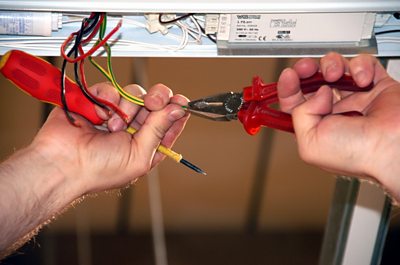
Competency in relation to electrical work is broadly defined as a person having appropriate technical knowledge, skills and experience to prevent danger or injury. This can be further broken down into:
- Adequate knowledge of electricity and electrical protective measures;
- Adequate experience of electrical work, including an understanding of the type of system to be worked on;
- An ability to recognise the hazards that may arise and whether it is safe to continue work.
The degree of knowledge, experience and skills necessary will vary according to the work undertaken. Evidence of technical knowledge is usually demonstrated by training and qualifications. Experience is either ascertained by following up references for previous employment or checking CVs or work portfolios.
Qualifications
While there is no legal requirement to have electrical qualifications to do electrical work, they do provide a ready means of identifying whether an individual has appropriate knowledge. An 鈥榚lectrician鈥� is generally considered to be a person who has completed a 3-4 year apprenticeship and holds a Level 3 technical and vocational qualification or Level 3 Diploma in electrical crafts.
Domestic work and 鈥楶art P鈥�
Electrical installation work carried out in a domestic property (such as for a program like DIY SOS for example) is under the scope of Part P of the Building Regulations in England and Wales. Such work should either be carried out by using a Part P registered contractor (listed at ) or it can be completed by a non-registered person but the work must be notified to the Building Inspector at the Local Authority concerned, prior to the work starting. Electrical work in Scotland or Northern Ireland is subject to different requirements (see links to IET guidance).
Temporary systems
It is a mandatory requirement for every 麻豆社 production to have as part of the crew at least one person who has completed the Creative Skillset Certificate (or equivalent) in Temporary Electrical Systems since April 2016. Freelancers may be permitted to work on temporary systems without it, if they are under effective supervision. This course was turned into a City & Guilds Accredited Training Program in January 2018 and the old Creative Skillset course is no longer available.
Equipment Testing
Competency to undertake testing of electrical equipment (commonly referred to as Portable Appliance Testing) could be demonstrated by way of in-house training or a formal, industry-recognised qualification such as the C&G 2377 (though this qulaification is not necessarily suitable for those working with production equipment). As with all electrical work, remember that the qualification/training alone may not fully demonstrate competence, as an element of real-world experience will be required.
What Can Go Wrong?
If someone performs electrical work without adequate training, knowledge or experience appropriate to the work being undertaken, they could injure themselves and others or create a fire risk. Examples where insufficient electrical skill could be hazardous include:
- Employees trying to fix faulty equipment themselves
- The use of excessively long extension leads, cables coiled up or left on drums
- Crew disabling RCDs on distribution equipment used in temporary systems
- Inappropriate use of electrical equipment such as overloading circuits
Legal/麻豆社 Requirements
- The Electricity at Work Regulations 1989 (EAWR) requires those working with electrical systems to have sufficient competence to do so.
- Requirements for the 麻豆社 are given in the document 麻豆社 Guidance on electrical competencies (see links)
- The popular 鈥�18th Edition update鈥� course (or the previous 17th Edition one) is not an electrical qualification and should not be treated as such. They should be considered as professional development for people already electrically skilled by other routes.
- The 麻豆社 has a detailed position on the need to do the update course in the following document 麻豆社 Position on 18th Edition of Wiring Regulations qualifications
- If you do work in domestic properties (e.g. as part of a production) check to see if it is classed as 鈥楴otifiable鈥� work coming within the scope of Part P of the Building Regulations or Scottish/Northern Irish equivalents (see links to IET guidance)
- Check that freelancers or staff have sufficient electrical training and qualifications appropriate to the work they are undertaking
- Employees must not do any electrical work if they have not had appropriate training or approval from their line manager.
Division Specific Issues
- This guidance applies across the 麻豆社.
Useful documents
-
[麻豆社 Network only] Version 8. May 2023
-
[麻豆社 network only] Version 3. May 2023
Recommended links
-
Certificate in Temporary Electrical Systems Electrical safety training course designed to ensure those working with electricity in temporary distribution systems on productions can comply with BS 7909
麻豆社 electrical safety topics
-
Electrical safety homepage
A selection of guidance documents and general advice in relation to Electrical Safety in 麻豆社 premises, on productions and events. -

麻豆社 policies for electrical safety
麻豆社 policies detailing its overarching approach to the management of electrical safety. -
麻豆社 electrical safety guidance documents
Summary of 麻豆社 electrical guidance (links within document titles) -
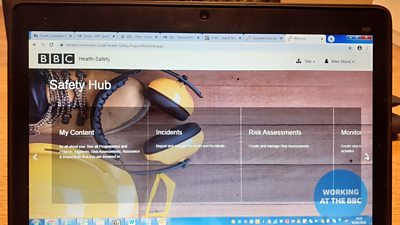
Electrical risk assessments and reporting of incidents
This section will help those who need to do a risk assessment where electricity is being used. It also gives guidance on reporting requirements for any electrically-related incident. -
Electrical safety in 麻豆社 Premises
General guidance on use of electricity and electrical equipment when working in 麻豆社 Premises. -
Electrical safety in Studios
A straightforward guide to electrical safety management in studios and similar locations. -
Safety of electrical equipment and appliances
Requirements for electrical safety of electrical equipment and appliances (鈥楶AT testing鈥�). -
Electrical competency and Part P requirements
Guidance on what to look for when employing contractors or freelancers to do electrical work. -
Electrical safety requirements for Production Managers
Find out what you should know and what measures should be put in place for your production. -
Bringing your own equipment to work and contributor鈥檚 equipment
Basic guidance on the safe and appropriate use of personal electrical equipment whilst at work and requirements. -
Temporary electrical systems and BS 7909
Requirements for electrical safety management in accordance with BS 7909 for all temporary electrical systems. -
Small and Simple Temporary Electrical Systems
Guidance to help understand the requirements for simple temporary electrical systems such as interviews or photo shoots for example. -
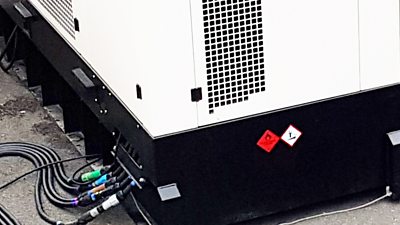
Generators
Guidance on the use of temporary generators including the application of earth electrodes. -
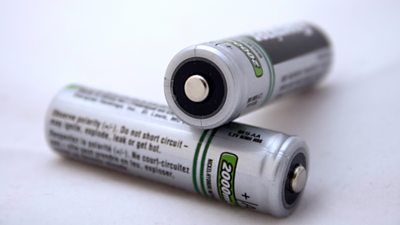
Batteries
Guidance on the safe use and storage of batteries. -
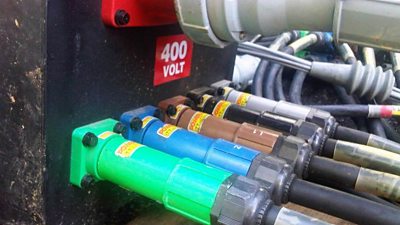
Certificate in Temporary Electrical Systems
An electrical safety training course designed to ensure those working with electricity in temporary distribution systems on productions can comply with BS 7909 and the relevant parts of BS 7671. -
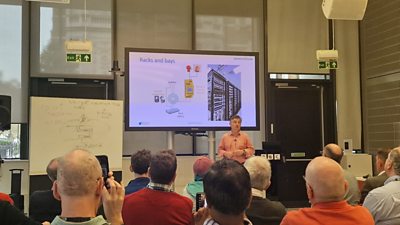 Electrical Principles Workshop to harmonise the approach to health and safety management on electricity across all areas.
-
External information and guidance on electrical safety
Links providing further information on all aspects of electrical safety, from external bodies (IET, HSE, Etc.) that 麻豆社 staff may find useful. Some guidance is required to be purchased. -

Health & safety Alerts and News
All the Health & Safety Alerts and News from the H&S Teams
More from SSR
-
Your platform to record accidents, risk assessments, assurance monitoring and inspections
-
(Internal Only)
-
麻豆社 Safety Guidelines
An A-Z of 麻豆社's Safety Guidelines -
Safety Advice Line: 0370 411 0464 Email: safety@bbc.co.uk
Events guidance - key links:
- Exhibitions
- General Guidance
- Indoor Location Recce Checklist
- Outdoor Location Recce Checklist
- Major Incidents & Emergency Planning
- Marketing and Promotional
- Noise Exposure
- Planning and Management
- Responsibilities
- Responsibilities Form
- Laser Lighting Effects
- Strobe Lighting
- Temporary Stages and Rostra
Health topics - key links:
- (麻豆社 network only)
- Contributors Fitness to Participate
- Display Screen Equipment (DSE)
- (麻豆社 network only)
- First Aid and Welfare on Location
- International Travel - Risks & Health
- Manual Handling
- Mental Health: Homepage
- (麻豆社 network only)
- Personal Health and Wellbeing
- Pregnancy
- (Internal Only)
- Tiredness and Fatigue
- Travel Health Contacts
麻豆社 High Risk:
- High Risk Guide (HRG)
- (Internal Only)
- Covert Filming
- Crisis Management and Security Support
- Door Stepping
- (麻豆社 network only)
- (麻豆社 network only)
麻豆社 Journalism - key links:
- Broadcast Vehicles
- Courts of Law
- Covert Filming (via Security on Location)
- COVID: Managing COVID risks is News Deployments
- Demonstrations, Protests and Crowds (via Security on Location)
- Door Stepping (via Security on Location)
- Press Conferences
麻豆社 Productions - key links:
- Aerial Filming and Airfields
- Animals: Displaying and handling for performance
- Boats: Working on
- Children and Young People
- Driving
- Electrical Equipment and Systems
- First Aid and Welfare on Location
- Food Safety (Cooking and Catering)
- Remote Location Working
- Roads and Streets: Working by
- Security of Productions on Location
- Stunts
- Tiredness and Fatigue
- Unmanned Aerial Systems (UAS aka Drones)
- Vehicles: Recording in, from and around
- Working at Height: Mobile Elevating Work Platforms
- Working at Height: Tower Scaffolds
麻豆社 Radio - key links:
- (麻豆社 Network only)
麻豆社 Security - key links:
麻豆社 Sport - key links:
About this site
This site describes what the 麻豆社 does in relation to managing its health, safety and security risks and is intended for those who work directly for the 麻豆社.
It is not intended to provide instruction or guidance on how third parties should manage their risks. The 麻豆社 cannot be held liable for how this information is interpreted or used by third parties, nor provide any assurance that adopting it would provide any measure of legal compliance. More information
Some links on this site are only accessible when connected to the 麻豆社 network
Search by Tag:
- Tagged with Electrical Electrical